

.avif)





Key takeaways
- An easy, fast return makes the next purchase more likely, while a slow return or a charge for returning often ends the customer relationship.
- Customers judge a return on self-service lodging, clear updates at every step, fast money or replacements, and a genuine choice between refund, exchange and store credit.
- Instant refunds paid in under 30 seconds, instant exchanges and store credit with a small bonus keep the value in your store and give customers a reason to return.
A return is usually the most emotionally charged moment a customer has with your brand. Something went wrong, they're mildly annoyed, and they're paying attention. Handle it badly and the relationship often ends there. Handle it well and you've proven something no campaign can: that buying from you is safe.
Shoppers behave accordingly. Most check the returns policy before they buy, a bad returns experience sends many of them elsewhere for good, and free, easy returns are one of the main reasons people pick one retailer over another. Returns aren't a cost centre to minimise. They're a retention channel you're already paying for.
How do returns affect customer loyalty?
Customers read your returns policy before they ever buy, which means the policy is doing conversion work long before anyone returns anything. After a return, the effect compounds. An easy return makes the next purchase more likely. A hard one quietly ends the relationship, and being charged for a return is the kind of thing customers remember at their next purchase decision.
The mechanics are simple enough. A customer who returns something and gets their money back quickly has tested your brand under stress and watched it hold. One who waited two weeks and sent three follow-up emails has learned the opposite lesson, and tells people about it.
What makes a satisfying returns experience?
Four things carry most of the weight. The customer can lodge the return themselves without emailing anyone. They know what's happening at every step. They get their money or their replacement fast. And they have a genuine choice of outcomes, because someone who wants a different size has a different problem from someone who wants their money back.
Everything else, branding included, sits on top of those. A beautiful portal that takes ten days to pay a refund still loses the customer. Get the four right and satisfaction does the compounding for you, because a customer who is happy with how a return went stops treating the next purchase as a risk.
Refund speed is the loyalty lever most retailers ignore
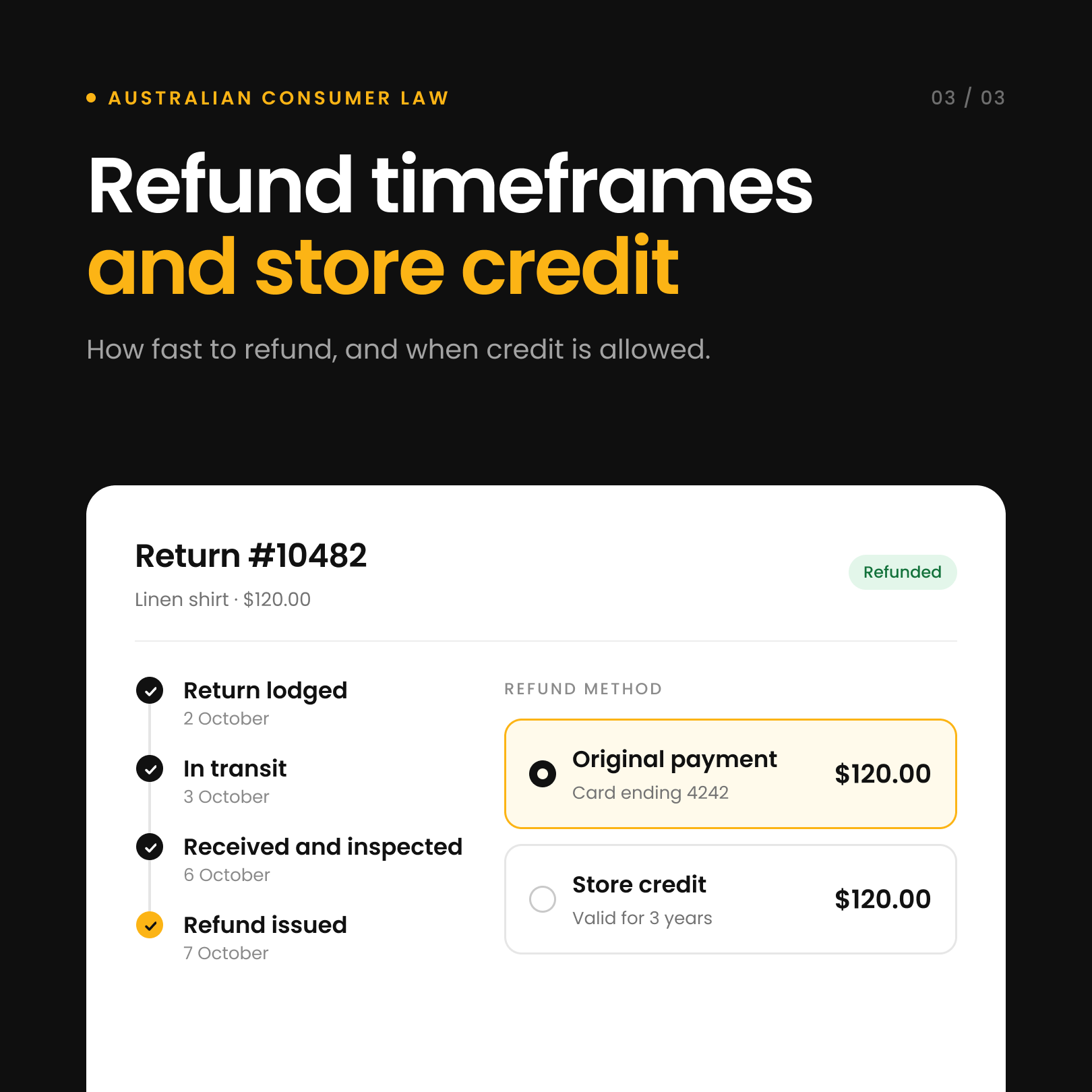
The gap between "refund approved" and "money in my account" is where trust quietly dies. A standard card reversal takes three to five business days, and the customer spends every one of them wondering whether they need to chase you.
With instant refunds, the customer is paid in under 30 seconds, before they've even sent the item back. That speed changes the story they tell about the return. It also changes what they do next, because a refund that lands immediately is far more likely to be spent with the same retailer than one that arrives next week.
Exchanges and store credit turn a return into the next order
If the problem is fit or colour, the customer doesn't want their money back, they want the right item. Instant exchanges ship the replacement as soon as the return is lodged, so the customer has the right size within days and the revenue never leaves your business.
For customers in between, store credit with a small bonus keeps the value in your store and gives them a concrete reason to come back. Every store credit redeemed is a second visit your marketing didn't have to buy.
Communication does the work your support team can't scale
Most of the anxiety in a return is silence. Automated updates at each stage fix that: return lodged, approved, item received, refund or exchange on its way. SMS reminders cover the physical steps, like a pickup scheduled for tomorrow or a return that hasn't been posted yet. And a customer app lets shoppers check every return themselves whenever they want.
When customers can see the status on their own, the "just checking in" emails mostly stop, which your support team will notice before anyone else does.
Use returns data in your loyalty and marketing stack
A returns platform that talks to your marketing tools turns return events into retention plays. Refundid sends return events to Klaviyo, so a lodged return can trigger a win-back flow and an approved one can trigger a follow-up. The Yotpo integration works in both directions: return activity flows into your loyalty data, and a customer's loyalty tier can feed your return rules, so VIPs automatically get more generous options.
Repurchase analytics close the loop by showing whether customers who return actually come back and buy again, which is the number this whole topic hangs on. The same reason data also feeds the upstream work of reducing customer returns in the first place.
Which tools make the returns process better for loyalty?
If loyalty is the goal, the list is short. A branded self-service returns portal so lodging a return is painless. Instant refunds and exchanges so outcomes are fast. Automated email and SMS updates so nobody wonders what's happening. And marketing integrations so your loyalty program and campaigns know who returned what and why. That combination is what people usually mean when they ask for a more seamless returns process, and it's the stack Refundid runs end to end. You can see how retailers use it in our case studies.
FAQ
Do easy returns really increase customer loyalty?
Yes. Customers who have an easy return overwhelmingly come back, and customers who have a hard one mostly don't. The returns experience is one of the few moments where a retailer can directly change a customer's future behaviour, because the customer is paying close attention to how you treat them.
Should returns be free?
Charging for every return usually costs more in lost customers than it recovers in fees. That doesn't mean every return must be free, though. Return rules let you be selective, such as free exchanges with paid refunds, free returns above an order value, or different terms for final sale items, so the cost control lands where it does the least damage.
How do you measure whether returns drive repeat purchases?
Track repurchase rate for customers after their return, and compare customers whose return ended in an exchange or store credit against those who took a refund. Refundid's analytics include repurchase reporting, so you can see the loyalty effect of your returns experience rather than guess at it.
Can loyal customers get better return terms?
Yes. If your loyalty program runs on Yotpo, Refundid can read a customer's VIP tier and apply different return rules to them automatically, like longer windows, free return shipping or instant outcomes. Your best customers get your best experience without anyone processing them manually.
How does the returns process affect customer satisfaction?
Directly. Speed of refund, clarity of communication and ease of lodging are the three things customers mention when they describe a return as good or bad, and they judge the whole brand on it. The product disappointed them once already, so the returns process is your second chance at the same customer.