

.avif)




Shipping protection has become an increasingly common feature at ecommerce checkout, giving customers the option to protect their orders against lost, stolen or damaged deliveries. For retailers, it offers another way to manage delivery issues while improving the post-purchase experience.
Whether it's the right addition to your checkout depends on more than customer demand. The way shipping protection is funded, what's included in the cover and how claims are handled all influence the value it delivers to your business.
This guide explains how shipping protection works, the different funding models available and the factors worth considering before deciding whether your store should offer it.
Understanding shipping protection
Shipping protection is an optional add-on that customers can choose during checkout to cover their order if it's lost, stolen or damaged while in transit. Rather than relying solely on the carrier's claims process, customers submit a claim through the shipping protection provider when an eligible delivery issue occurs.
For retailers, shipping protection creates a clearer process for managing delivery issues. Customers know where to go for support, while your team spends less time investigating claims, arranging replacements or responding to delivery enquiries.
The level of cover varies between providers. Most protect against lost, stolen and damaged deliveries, while others extend the post-purchase experience by including benefits such as free returns or a simplified claims process. Understanding what's included is just as important as comparing pricing when evaluating different providers.
Choosing the right funding model
How shipping protection is funded has a direct impact on the value it delivers to your business.
One approach is to absorb the cost as the retailer. Every order is automatically protected, creating a seamless experience for customers, but the cost becomes another operational expense that increases alongside order volume.
Many ecommerce businesses instead choose a customer-funded model. Customers decide whether they'd like to add shipping protection during checkout and pay a small fee if they opt in. This gives shoppers the flexibility to choose additional protection while allowing retailers to offer the service without increasing fulfilment costs.
When comparing providers, pricing is only one consideration. The claims process, customer experience, retailer revenue share and any additional post-purchase benefits all contribute to the long-term value of the solution.
The cost beyond replacing an order
Replacing an order is often only one part of the cost of a delivery issue. Customer enquiries still need to be answered, carrier investigations take time and replacements or refunds need to be processed. Even businesses with relatively low claim volumes can spend a significant amount of time resolving these situations.
Shipping protection creates a more structured process for managing those exceptions. Customers have a clear pathway if something goes wrong, while internal teams spend less time handling each issue manually.
Many providers also extend protection beyond lost, stolen and damaged deliveries. Features such as free returns or a more streamlined claims experience can improve the overall post-purchase journey and reduce friction after an order has been dispatched.
Does shipping protection create value for your business?
The answer depends on how delivery issues affect your business today. If replacing a lost order has a noticeable impact on your margins, or your team regularly manages delivery enquiries, shipping protection may reduce both the financial and operational cost of those incidents. For some retailers, customer-funded shipping protection can also create an additional revenue stream through a share of the protection fee.
Some businesses choose to self-insure by covering the cost of lost or damaged orders themselves. That approach can work when claim volumes are low, but as order volumes grow, those costs become more difficult to predict. A dedicated shipping protection solution provides a more consistent way to manage delivery-related costs while improving the customer experience.
Stores selling premium products, fragile goods or items shipped across long distances often have the most to gain because the cost of resolving delivery issues is typically much higher than for lower-value purchases.
Looking at your claim history, support workload and replacement costs will provide a clearer picture of whether shipping protection is likely to deliver value for your business.
How Checkout Plus helps
Once you've decided shipping protection is the right fit, the next consideration is how you'll introduce it to customers.
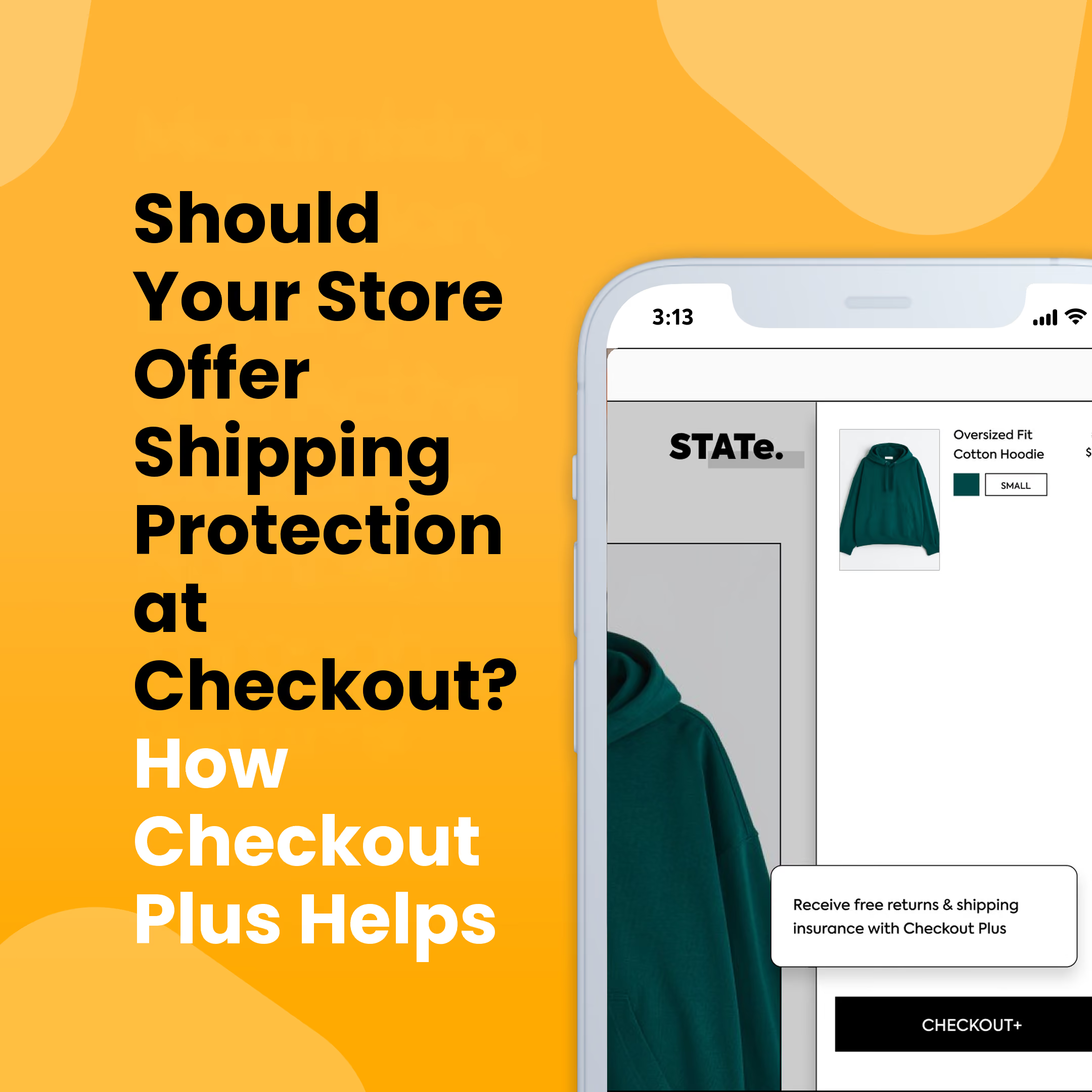
Checkout Plus allows customers to add shipping protection during checkout by paying a small opt-in fee. Retailers don't pay to offer the service, making it free to implement.
Your business also retains a share of the customer-paid fee, creating an additional revenue stream that can help fund free returns and shipping protection without reducing your margins. Alongside protection for lost, stolen and damaged orders, Checkout Plus extends the post-purchase experience by supporting free returns through the same solution.
For retailers, Checkout Plus provides a straightforward way to introduce shipping protection without adding another operating expense.
Conclusion
Shipping protection gives ecommerce retailers another way to manage delivery issues while improving the post-purchase experience for customers. The right solution depends on how your business handles delivery-related costs, the products you sell and the experience you want to provide after an order has been placed.
Understanding how different funding models work, what providers include and how shipping protection fits into your broader operations will help you make a more informed decision. If you're looking for a customer-funded solution that's free for retailers and supports both shipping protection and free returns, Checkout Plus offers a practical way to deliver both.
You can read more about how Checkout Plus works, or book a demo and we'll show you what it would look like on your checkout.