

.avif)


.avif)


How to Write an Ecommerce Return Policy for Footwear Brands (2026)
If you’re a fashion retailer that sells shoes, then you probably know firsthand the challenges of creating a returns policy for footwear. They’re probably the most frequently returned items you sell. Having a vague, unclear returns policy makes things worse for your customers and your business.
In this guide, we’ll show you how to write a footwear return policy for your store that is legally sound, without cutting into your profit margin on returns.
What Is An Ecommerce Return Policy?
An ecommerce returns policy is a written article or document that outlines the circumstances in which customers can and cannot make returns on items they’ve purchased from your store. A returns policy should cover:
- what can be returned
- the condition of the item to be returned
- how long customers have to make returns
- who pays for return shipping
- how refunds are issued
Return policies aren’t just about businesses: they’re a public promise. They’re an additional piece of information for customers, on top of the rights they already have by law.
Why Footwear Returns Are Different
From our experience with footwear brands and over 350 retailers, the return rate on footwear sits at 10-15%. This makes footwear one of the most returned fashion items in the ecommerce space.
It’s easy to see why footwear could be the most returned fashion item: there’s no standard sizing across all the brands on the market, width fittings can have a lot of variation, and a person can’t always try on shoes before buying them.
Because of these variations, many customers engage in bracketing, which is when they purchase 2 or 3 sizes for a piece of footwear, with the intent of sending the ones that don’t fit correctly back. Bracketing is fairly standard shopper behaviour, and doesn’t cross over into returns abuse. Your footwear policy shouldn’t be against bracketing; it should be designed around it.
Where things do get tricky is reselling returned items. If a returned pair of shoes has a scuffed outsole, this can make them unsellable. As a result, footwear has a write-off risk that most other fashion categories don’t have. Each footwear return costs from $10 to $65 to process, and only about half of those returns can be resold at full price.
Ultimately, your footwear policy should be seen as margin control, and not admin to get out of the way. With a well-thought-out policy, you’ll help reduce return rates while upholding the legal rights of customers.
What The Law Actually Requires
The legal requirements surrounding product returns will vary, depending on where you and your customers are based.
In Australia, every product sold has consumer guarantees, and no return policy can cancel these out. Under Australian Consumer Law, valid return reasons include:
- Acceptable quality: If an item shows signs of damage after only a short period of use, Australian consumers are entitled to return it on the basis of quality. Footwear example: A shoe shouldn’t start to fall apart after a short period of normal use.
- Fitness for purpose: When customers purchase an item, it should perform in a similar way to other goods of the same type, such as a kettle being capable of boiling water properly. Additionally, an item should achieve a specific purpose or function as described to them by a seller. When items aren’t fit for purpose in such a manner, customers have the right to a refund. Footwear example: A pair of hiking shoes said to be waterproof must not let water in during a normal hike in rainy weather.
- Matching description: All goods sold should match their description as outlined by a seller. Refunds must be given if an item’s description differs significantly from how it’s been described in written or verbal form. Footwear example: A pair of shoes advertised as having memory foam soles must have memory foam soles, otherwise a consumer is entitled to a refund or replacement.
The severity of a product’s fault can determine which remedy is available to the customer or a business. If an item has a major fault, a customer can ask for either a refund or replacement. When an item has a minor fault, a business is allowed to choose whether to repair, replace, or refund an item.
All of these return reasons are legally applicable, regardless of whether a business offers change of mind returns on items.
Disclaimer: The above is general information only and should not be considered legal advice.
Change Of Mind vs Consumer Guarantees: The Difference That Trips Brands Up
Consumer guarantee returns are a legal obligation. If a pair of shoes is faulty, not as described, or not fit for purpose, then a customer can ask for a refund.
However, when it comes to change of mind refund laws in Australia, there is no legal obligation for businesses to offer a customer a replacement or refund. The following table illustrates how consumer guarantee returns and optional change-of-mind returns work:
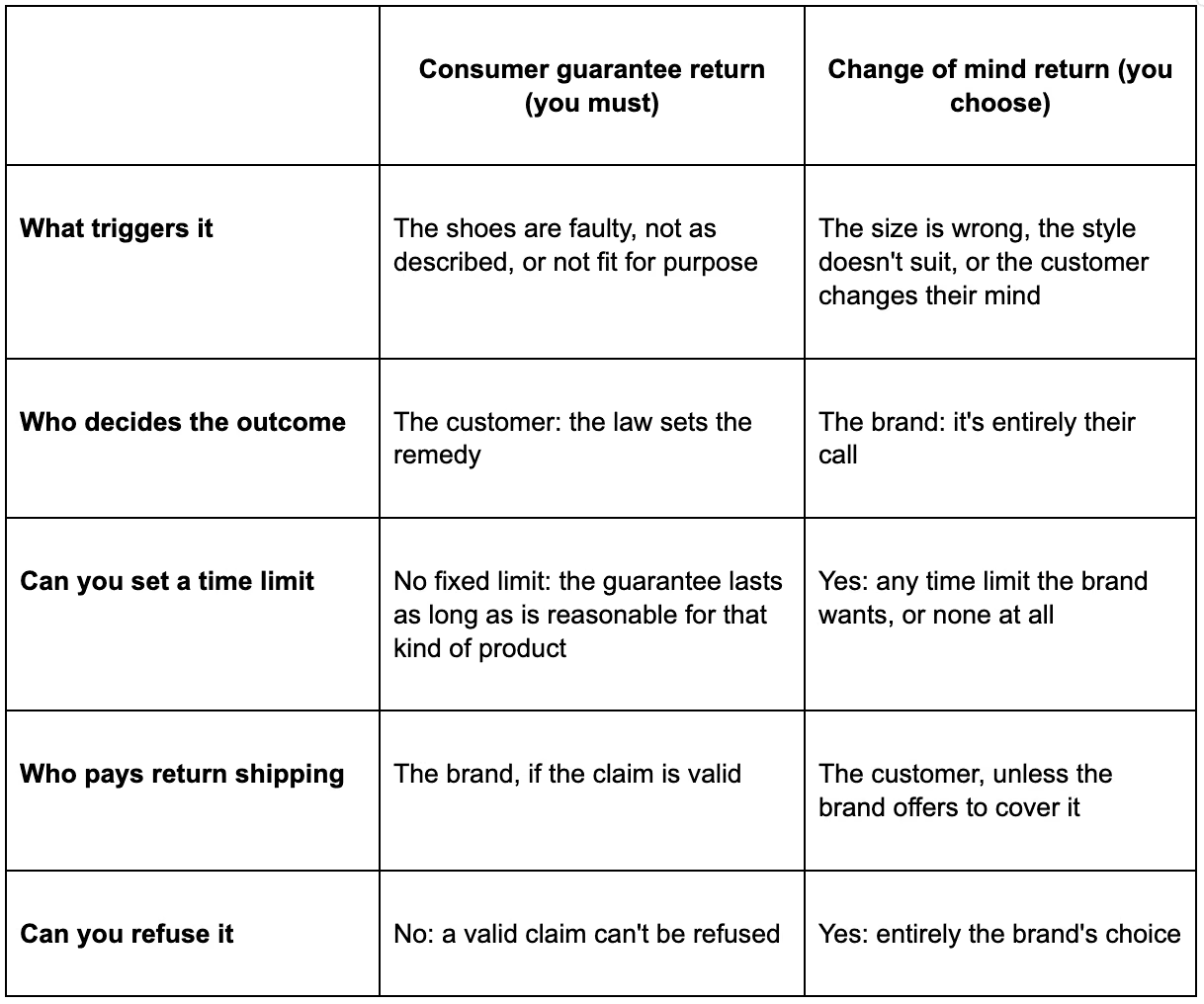
While there’s no legal requirement for change of mind returns, you can set your own rules. Whether it’s having time limits or prohibiting them completely, you can create your change of mind returns policy as you see fit.
The 6 Clauses Every Footwear Return Policy Needs
When you’re crafting your footwear policy, there are 6 key clauses that you should keep in mind.
1. What can and cannot be returned
Your footwear policy should cover every facet of what customers can and cannot return. You might have specific exclusions in mind, such as worn outsoles, custom or made-to-order pairs, final sale styles, and hygiene-affected items like insoles and socks. However, a "final sale" exclusion cannot override standard consumer guarantees, such as when an item is faulty.
Example clause: Our business does not accept returns on worn outsoles, made-to-order shoes, and items subject to hygiene considerations, including insoles and socks.
2. Your return window
When creating your return window policy, you can choose how long customers have to make a return. Longer windows can help lift conversion, while shorter windows can help protect resale value on seasonal stock items. A return window of 30 days is a common expectation, although increasing this window rarely results in increased return rates.
Where disputes can occur is when the return window starts: some businesses start it from purchase, others from when an item is successfully delivered. Make it clear when your return window starts, and you’ll have fewer item return disputes.
3. Condition Rules For Footwear
Perhaps the most important factor that will guide your customer return rules is your conditions clause. Shoes and their associated packaging all have variables that need to be accounted for, and your condition clause can warrant sub-clauses.
Worn vs unworn
For most people, trying a pair of shoes indoors on carpet is a practical, reasonable standard for a 'change of mind' return to be made. It’s better than a blunt policy stating that returns are for unworn items only, as carpet-worn shoes may still be in a 100% resellable condition.
Physical wear
If there are signs of physical wear on a pair of shoes, such as scuff marks on the outsole, the full value of the shoes is affected. Scuff marks are clear evidence that a shoe has been worn, and they cannot be put back on the shelf in as-new condition.
Shoe boxes
Your policy should also account for shoe boxes, and whether they’re counted as packaging or part of the product. It’s up to you to decide whether an opened or damaged shoebox means that a shoe cannot be returned as-new by a customer. You also need to consider whether a shoebox can be used as a return shipping container by itself, or whether additional packaging is required.
Tags, insoles, and dust bags
Though they may be small factors, the condition of tags, insoles, and dust bags should be considered in your returns policy. For example: "Tags and original insoles should be kept with the shoes for returns. If a pair of shoes comes with a dust bag or other extra pouch, then the returned pair should include it."
Photos
When a customer lodges a return on a pair of shoes they’ve bought, it’s worth having a policy that requires photos before a return is processed. By having a customer submit photos with their return claim, you can quickly spot many of the tell-tale signs that the return may no longer meet your policy’s condition requirements, such as scuff marks on the outsoles, or missing insoles.
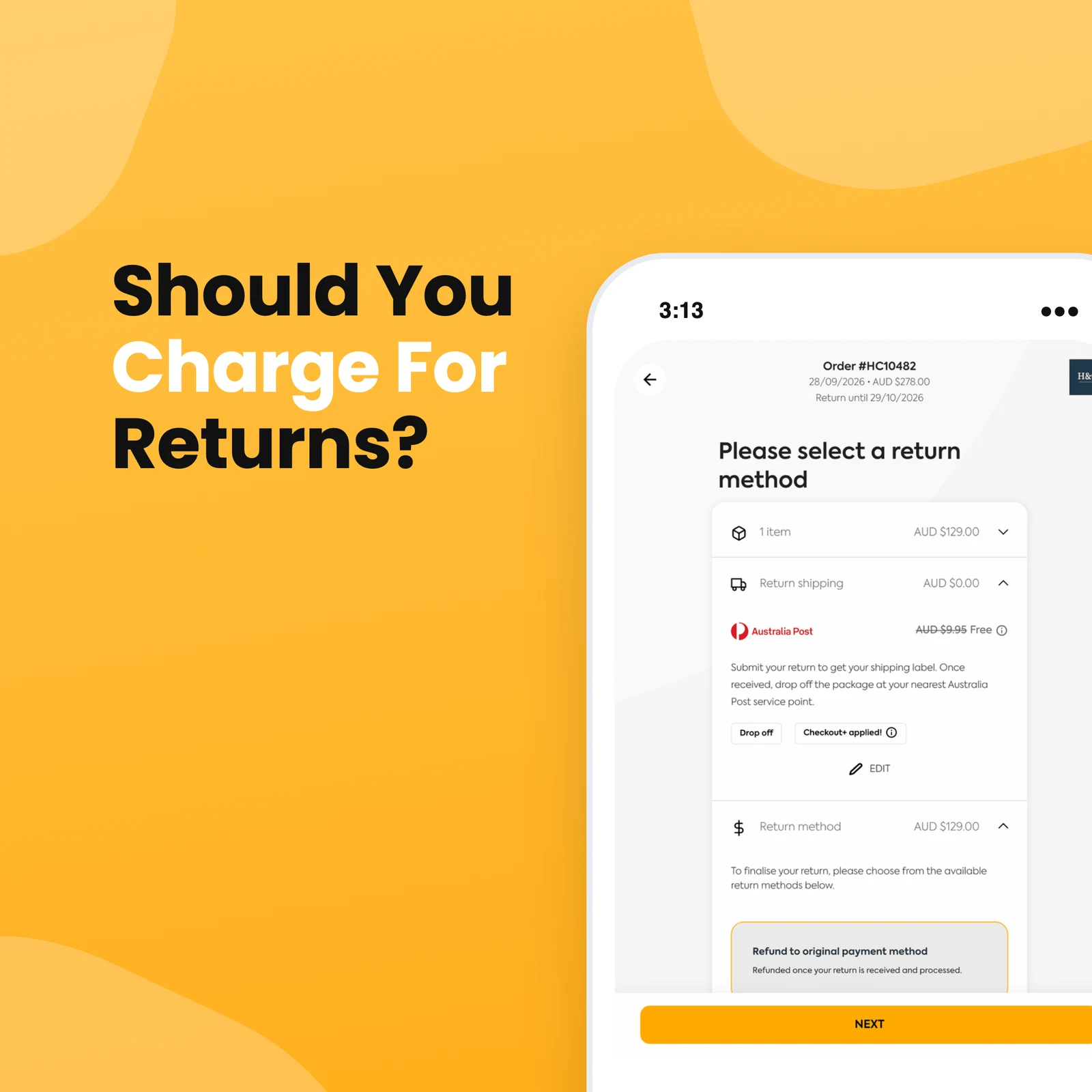
4. Who pays for return shipping
There are three different ways to handle footwear return shipping:
- Free return shipping: Customers can return their footwear without paying for shipping. Free shipping can increase checkout conversion, but it can also increase return volume.
- Flat-rate deduction: A retailer has a flat rate for shipping, which is subtracted from the customer’s product refund amount.
- Customer pays: A customer covers the full cost of return shipping themselves, with no coverage by the retailer.
If the shoes are faulty, then return shipping should be covered by the business. That’s not optional: that’s Australian Consumer Law.
The specific type of shoes you sell can also affect your returns policy. Boots and heeled shoes cost far more to ship than standard sneakers or sandals, so a single flat fee across your range can end up losing you money.
When you use Refundid to manage your returns, you have the option to enable Checkout Plus for customers. For a small fee, they’ll have return shipping protection at checkout, and you’ll gain an extra revenue stream.
5. Refund, Exchange, or Store Credit and How Fast
In most cases, instant exchanges are the best outcome for footwear returns. This is because most returns are a fit problem, rather than a product problem. Customers simply want to find the right size for their feet. With instant exchanges, the correct size ships to customers straight away, instead of waiting until the original pair of shoes is returned.
Store credit can also be offered in lieu of exchanges. However, it cannot be forced when a refund is legally owed, as outlined in Australian Consumer Law.
You should always offer a specific timeframe of when refunds will be issued. For example: "A waiting period of up to 14 business days." When you offer instant refunds, a customer receives their money as soon as they lodge their return.
6. Faulty shoes and where you can draw the line
Each piece of footwear can be vulnerable to different types of faults, including:
- sole separation
- stitching failure
- hardware breaking
- colour transfer
Standard Australian consumer guarantees may apply beyond a standard return window if a fault appears within a reasonable timeframe.
Even taking all of the above into account, ecommerce return fraud can still occur. A good policy can reserve the right to review unusual return patterns without becoming accusatory. It’s a far better approach than having a blanket ban, as this risks breaching consumer guarantees.
Words and phrases that will get you in trouble in Australia
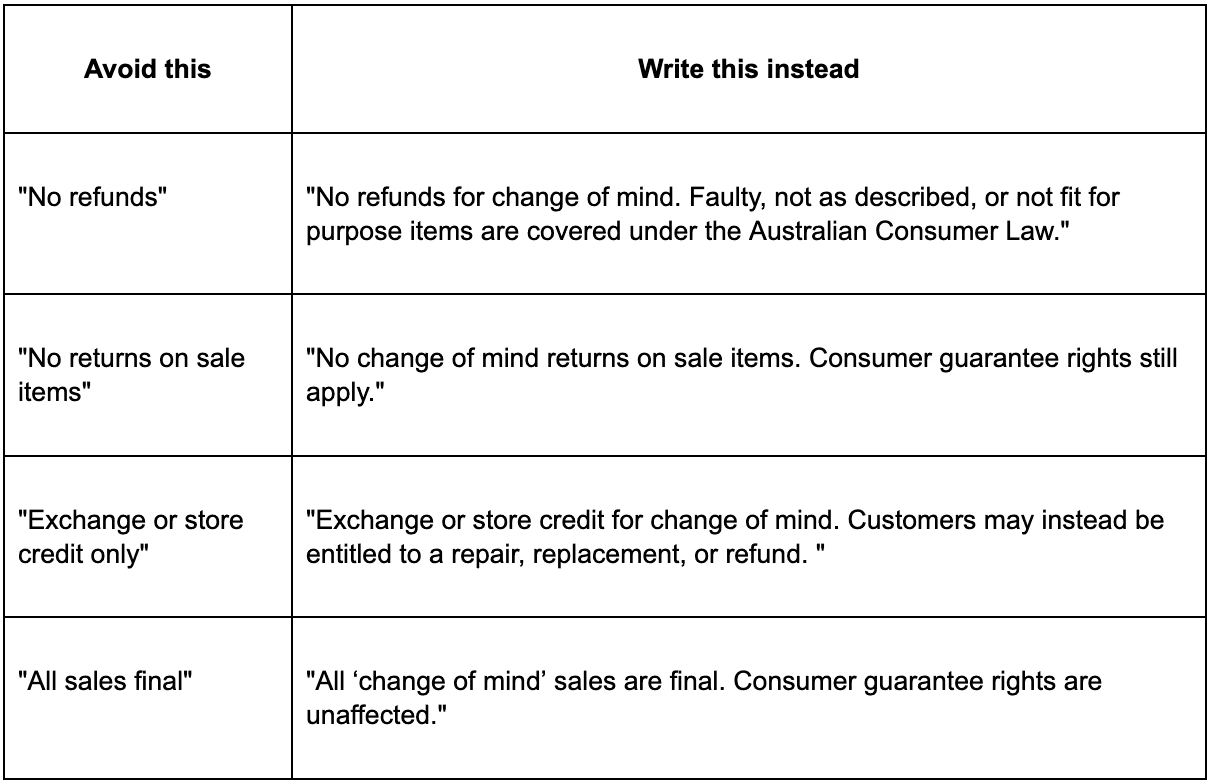
If you’re an Australian business, then you need to be careful with the terms you use in your return policies. Here are some words that are best avoided, and the alternatives that can be written into your footwear return policy:
Using these terms can misrepresent customers’ legal rights and may constitute misleading conduct. Even if something is stated in a returns policy, it doesn’t mean it’s enforceable. For more information on your rights and responsibilities around returns, see the ACCC guidance for businesses.
Turning your return policy into a sales asset
Ideally, your footwear returns policy should be read by customers before purchase, not after. This way, you can leverage it as a conversion asset, and not a legal notice to get out of the way.
Always give it visibility throughout the customer journey: on the product page next to your size guide, in the shopping cart and at checkout, and in order confirmation emails. For footwear in particular, placing your returns policy right alongside the size guide means that customers can order pairs of shoes without the fear of being denied a return due to fit issues.
Wherever you place your returns policy, it’s best not to bury it inside general terms and conditions. It should always be easily accessible and transparent to customers, which signals mutual trust. Combine this with fast refunds, easy exchanges, clear communication, and no arguments over trivial condition issues, and you’ll find customers are more likely to purchase from you again in the future.
To help configure your returns policy, Refundid’s returns analytics can show you which styles and sizes are causing the most returns. When you start seeing clear trends, you can tweak your stock and fix issues at their source, instead of letting them continue. This can mean anything from stocking more of one colour or size and less of others. It’s entirely up to you, and what your data tells you.
How Refundid Helps Footwear Brands
If you’re a footwear brand looking for an end-to-end returns and exchanges platform, Refundid can meet many of your key needs. Our infrastructure means your customers can access instant exchanges if they need to swap shoes out for another size, as well as instant refunds. In both cases, nobody is left waiting for their money, and you’re protected from risk and fraudulent returns.
Our Checkout Plus feature also grants your customers guaranteed free shipping if they do need to return an item. In turn, you’ll have an extra bit of revenue, regardless of whether they make a return claim. We’ve partnered with footwear brands such as Peter Sheppard Footwear, Aquila, and Rollie, helping them turn their returns and exchange policies into conversion tools that benefit their business and customers.
Frequently asked questions
Do I legally have to accept returns in Australia?
You are not legally required to accept customer footwear returns for change of mind. However, if a product fails to meet a consumer guarantee, then you are legally obliged to accept a return under Australian Consumer Law.
Can I say "no refunds on sale items"?
No, you cannot say "no refunds on sale items". A sale item still carries consumer guarantees, and by stating "no refunds on sale items", it can be seen as misleading conduct. You can, however, make it clear that there are no change of mind returns on such products.
Can I refuse a return if the shoes have been worn outside?
Yes, you can refuse returns on the basis of a change of mind, provided you have condition rules stated clearly (e.g. no scuff marks). However, if the shoes are faulty, then you must honour the return to comply with Australian Consumer Law.
Who pays for return shipping on faulty shoes?
A business must pay for return shipping on faulty shoes, as returns on faulty products are covered by Australian consumer guarantees.
Conclusion
Since footwear ranks as one of the most returned and exchanged categories in retail, it is important to ensure that the return policy is given the attention that it requires. A well-crafted returns policy isn’t merely an additional business cost, but rather an essential, core part of the customer’s experience. When it is done right, a good returns policy and process should boost retention, repeat purchases, customer satisfaction, and ultimately revenue.