


.avif)




Every return comes with a reason, whether you ask for it or not. A customer who picks "too small" is telling you something about your size chart. A customer who picks "not as described" is telling you something about your product page. If you collect those answers properly and look at them regularly, return reasons are some of the most useful customer feedback you'll get.
They can do a second job too. Some returns you simply don't accept, like final sale items or things that have been worn. Asking the right question in your returns portal can catch those before the customer ever lodges the return.
Why return reasons are worth collecting
Without a reason attached, a return is just a refund and a parcel on the warehouse floor. You know it happened, but you don't know whether the cause was the product, the listing or the courier. Add that up over a few hundred returns a month and you're making stock and merchandising decisions with half the picture.
A decent set of return reasons lets you separate the returns you can do something about from the ones you can't. It also gives your support team some context before a customer emails them, which makes those conversations a lot shorter.
The most common return reasons, and what they tell you
Most ecommerce returns come down to a handful of reasons: the wrong size, the item not matching its description, damage in transit, a fault, the wrong item being sent, or a simple change of mind. One return for any of these tells you very little. What you're looking for is the same reason coming up again and again, ideally broken down by product and variant so you can see exactly where it's happening.
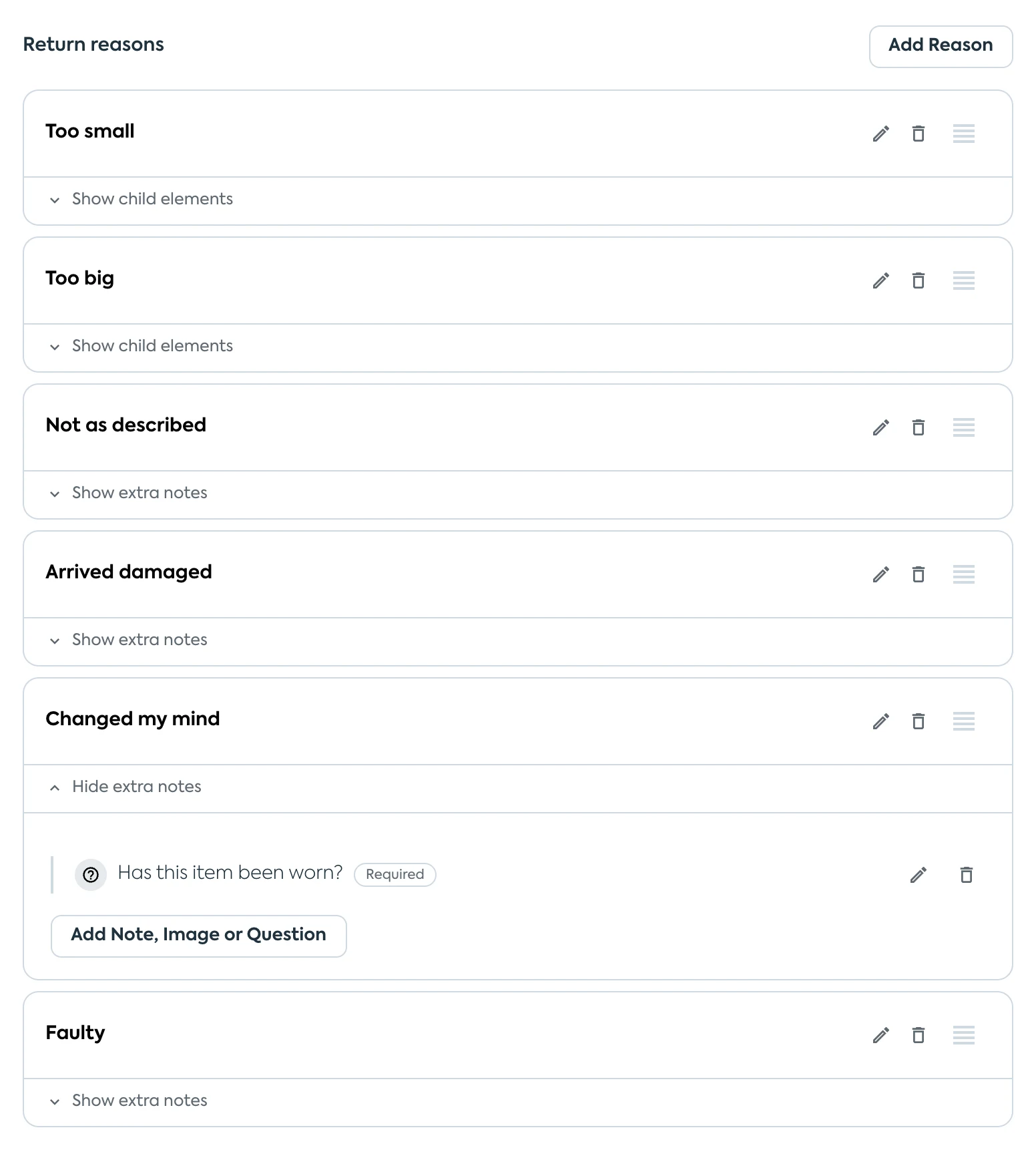
Sizing problems are usually the easiest to spot. If one style keeps coming back as too small while the rest of the range is fine, it probably runs small, and a line on the product page saying so costs a lot less than processing the same return every week. If a whole category leans one way, check your size chart before you blame the garment.
"Not as described" points at the listing. The colour might look different on screen, the fabric might be thinner than the copy suggests, or an important detail might only show up in the fourth photo. Once you know which product is causing it, these are usually quick fixes.
Damage in transit is a packaging or courier question rather than a product one. If damaged returns cluster around one product, it probably needs more protection in the box. If they cluster around one region or one carrier, that's a conversation with your shipping partner. Asking for a photo on this reason makes it much easier to tell which it is.
Change of mind is the reason most retailers would like to see less of, but it's also an honest signal about whether the product lived up to what the customer expected. A product with a lot of change of mind returns might feel overpriced once it arrives, or customers might be ordering it in a few colours and keeping one. This is often where steering customers towards an exchange or store credit makes the biggest difference.
Keep faulty items as their own reason, separate from damage in transit. A fault is a quality issue you'll want to raise with your supplier, and in most places faulty goods come with legal obligations that change of mind returns don't. Lumping them together hides both problems.
Wrong item sent is the one reason that's entirely on you. A few of these are normal. A steady stream, or a cluster around one product, usually means a picking error, two similar SKUs sitting side by side in the warehouse, or a variant mapped to the wrong barcode.
How to collect return reasons you can use
Keep the list of reasons short and specific. Customers skim long lists and pick whatever looks closest. Six to eight reasons that each describe a different problem will give you cleaner data than twenty overlapping ones. It's worth having "Other" with a free text box, but if lots of people choose it, your list is missing something.
Follow-up questions work better than longer lists. If a customer says the item didn't fit, ask whether it was too big or too small. If they say it arrived damaged, ask for a photo. You get the detail without crowding the first screen.
Where you can, use questions with fixed answers instead of free text. Free text is good for nuance but hard to report on. A single or multiple choice question can be counted and compared across products, which is what you need when you're looking for patterns.
If your policy depends on whether the tags are still on, whether the item has been worn or whether it was bought on sale, ask about it directly. Most customers answer honestly when the question is plain, and it saves everyone from a return that was always going to be rejected at the warehouse.
Then make sure someone reads the answers. A monthly look at the top reasons for your best sellers is usually enough to catch the problems worth fixing. We've written separately about tracking returns analytics over time, and about using that data to reduce your return rate.
Use return reasons to suggest the right exchange
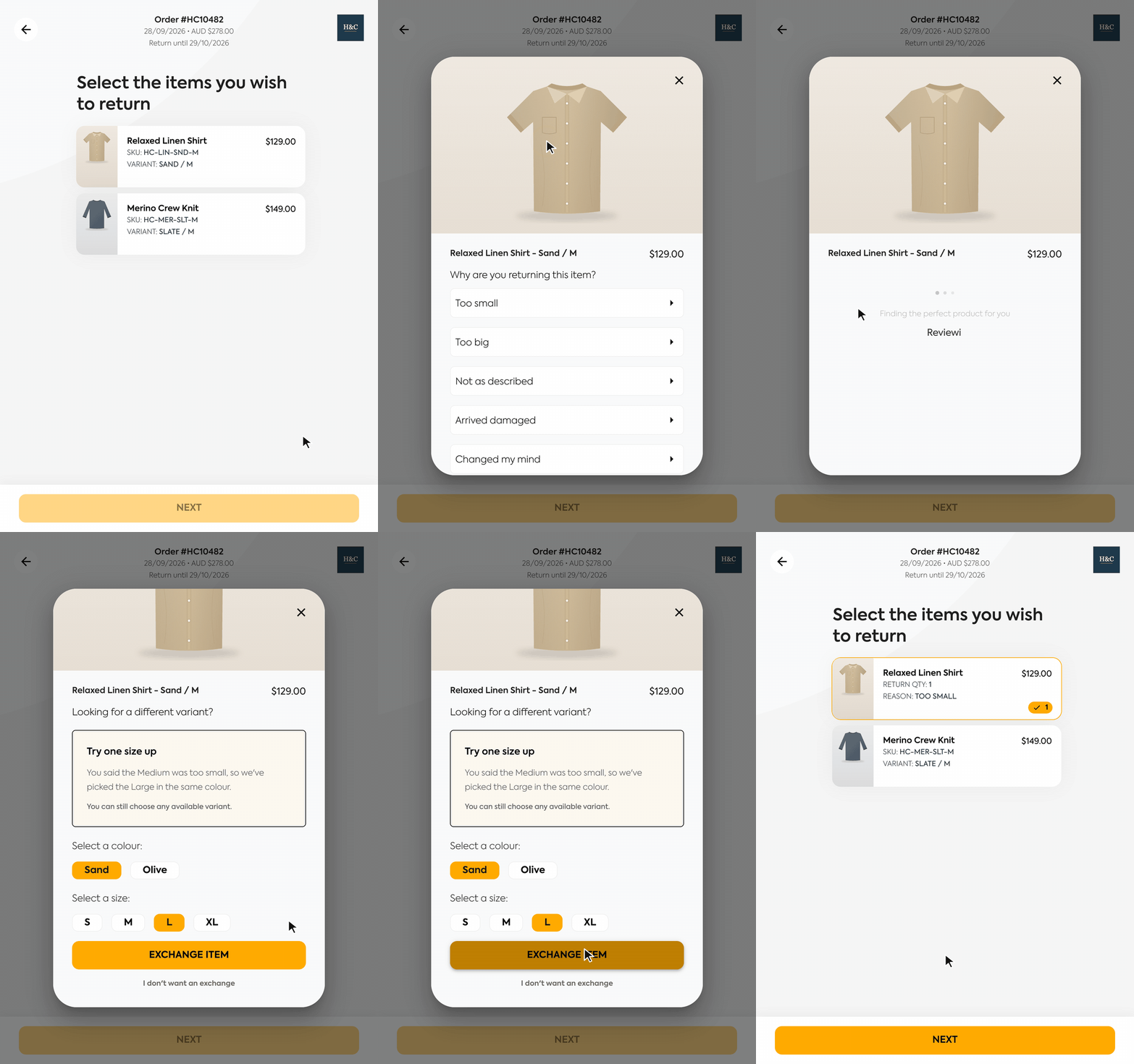
A return reason often tells you what the customer needed instead. Too small usually means one size up. Wrong colour means the same item in another colour. Wrong item sent means the variant they actually ordered. If you ask the question well, the answer gets you most of the way to an exchange.
Refundid's AI exchange recommendations use exactly that. When a customer picks an item and a return reason, we look at the reason, their answers to your follow-up questions and the other variants of that product, and suggest one replacement with a short note on why, like the next size up for a shirt that came up small. The customer can take the suggestion, pick a different variant, or skip the exchange. If the reason is one an exchange won't fix, like a change of mind, we don't suggest one. You can turn it on under Settings > General.
Stopping returns you don't accept
Most stores have some returns they won't take. Final sale and clearance items, swimwear with the hygiene liner removed, personalised products, things that have obviously been worn. Too often these get handled the slow way: the customer lodges the return, prints a label, ships the parcel, and the item gets rejected when it arrives. Now you've got an annoyed customer, a parcel to send back and a support ticket.
It's far better to stop those returns before they're lodged and tell the customer why. Your return questions are the natural place to do it, because they already ask about the things that decide whether an item is eligible. If a customer answers yes to "Has this item been worn?", there's no point letting them carry on.
When you do block a return, send the customer somewhere useful. That might be your returns policy, so they can read the rule for themselves, or your support page if you'd like to look at some cases one by one. A blocked return with no explanation usually turns into an email to your team anyway.
Be careful with faults. Selling something as final sale doesn't usually mean you can refuse a faulty one, so instead of a flat no, use the block to send those customers to your support team and sort it out with them directly.
How blocking works in Refundid
In Refundid you can add single or multiple choice questions to any return reason, including the more specific reasons that sit underneath it. Each answer has a Block return switch beside it. Turn it on for the answers you don't accept, add one link for the question, and save.
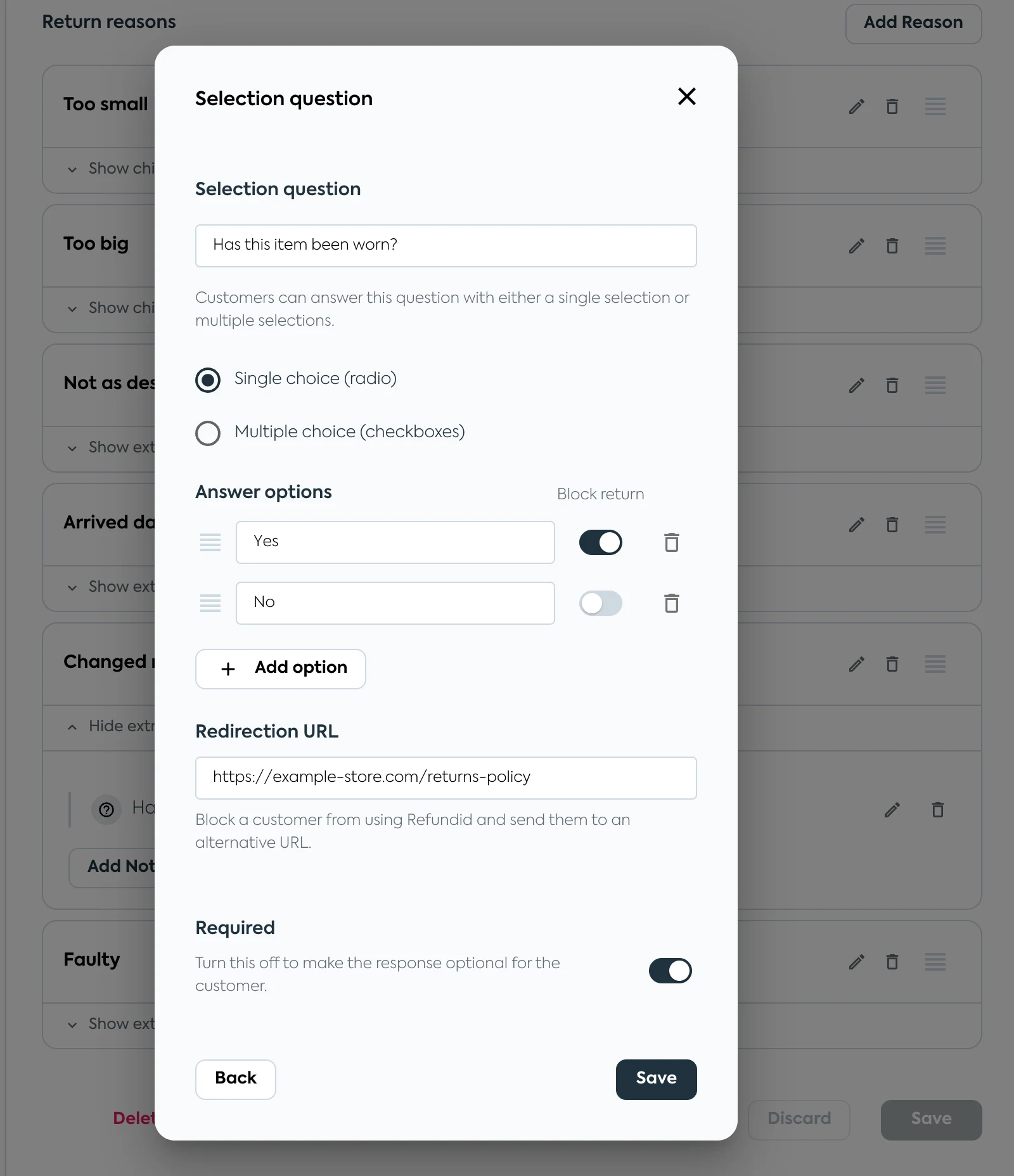
If a customer picks a blocked answer and presses Continue, they can't go on to lodge the return. They see a screen asking them to contact you, with a button that takes them to the link you chose, like your returns policy or your support form. Customers who only pick answers you accept carry on as normal, and their answers show up with the return in your dashboard and reports.
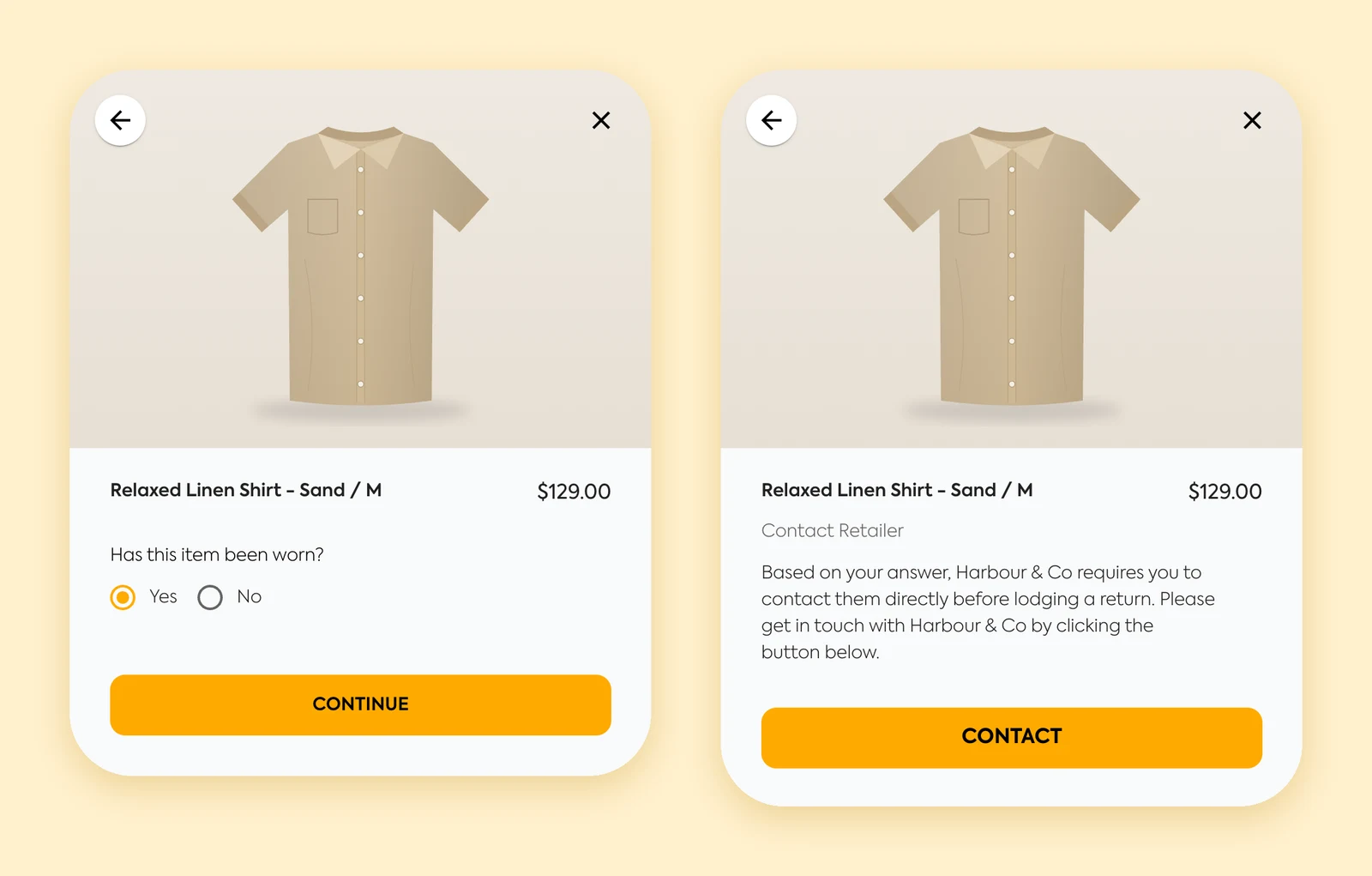
As an example, you could add "Was this item bought on sale?" to your change of mind reason and block the Yes answer, linking to the part of your policy that covers sale items. Or ask "Have the tags been removed?" on your sizing reasons and block Yes there. For faulty items, you could ask whether the customer has already been in touch with your team and send anyone who hasn't to your support page first.
You can still block a whole return reason if you'd rather send every customer who picks it to your team. The block only applies to your online returns portal, so your staff can still lodge a return for a customer from the merchant portal or at the counter when there's a good reason to make an exception. It all sits alongside the rest of our return rules, and the answers feed into the same reporting you'd use to spot the patterns above.
Put your return reasons to work
Most stores already collect return reasons and never look at them. Ask a handful of specific questions, check the answers once a month, and fix the product pages and size guides that keep sending items back. Then use the same questions to catch the returns you were never going to accept, and point those customers to your policy or your team before anything gets shipped.
If you'd like to see how return questions and blocking work in Refundid, book a demo and we'll walk you through it.
.avif)