

.avif)


TL;DR
Your returns policy governs change of mind returns. Faulty returns are governed by the consumer guarantees in Australian Consumer Law, and your policy can't override them. If the problem is major, the customer chooses a refund or a replacement. If it's minor, you can fix it with a free repair, or offer a replacement or refund if you'd rather. Your change of mind time limits, tag rules and exclusions don't apply to faulty items, and once you confirm a fault you pay the reasonable cost of getting the item back.
Our guide to change of mind refund laws in Australia covers the change of mind side. This post covers the other side: what you have to do when the product itself is the problem.
Is something wrong with the product?
That one question decides whose rules apply. If the item works, matches its description, and the customer just doesn't want it anymore, it's change of mind. That includes finding it cheaper somewhere else or deciding they don't like it. You don't have to take it back, but if your policy says you will, you have to follow your policy.
If the item fails a consumer guarantee, it's a faulty return and the law sets the remedy. A product has to:
- be of acceptable quality, which means safe, durable, free from defects and with an acceptable appearance and finish
- be fit for any particular purpose the customer told you about or that you advertised
- match its description, and any sample or demonstration model
- meet any extra promises you or the manufacturer made about it
Two of the ACCC's own examples: a new pair of shoes that loses a heel the first time it's worn, and towels ordered as pink from a colour chart that arrive red. Both are consumer guarantee claims, not change of mind.
The guarantees don't cover a problem the customer caused by misusing the product, or a problem you told them about before they bought it. A dress sold as a marked second because of a pulled thread can't later come back as faulty because of that thread. A different fault that wasn't disclosed is still covered.
What makes a failure major
The ACCC says a product has a major problem when it:
- is unsafe
- is very different from the description or sample
- has one serious problem, or several smaller ones, that would have stopped someone buying it if they'd known
- can't be used for its normal purpose, or a purpose the customer told you about, and can't easily be fixed within a reasonable time
The third point is the one that catches retailers out. A jacket with a sticking zip might be a minor problem on its own. The same jacket with a sticking zip, a seam coming apart and a torn lining could add up to a major one.
What you owe for a major failure
The customer chooses between a refund and a replacement of the same type of product. You don't get to pick, and you can't insist on a repair. They can also keep the item and be compensated for the drop in its value, and in some cases claim compensation for other loss or damage the problem caused.
A refund for a major failure should be the full amount the customer paid. You can't take anything off for the use they've had from the product, and the money should go back the way they paid unless you both agree otherwise. Store credit is only on the table if the customer is happy to take it.
What you owe for a minor failure
For a minor problem, you choose the remedy. Usually that's a free repair, but you can offer a replacement or refund instead, and for low-value items that's often simpler.
If you can't or won't fix it within a reasonable time, the customer can get it fixed elsewhere and recover the reasonable cost from you, ask for a refund or replacement, or keep the product and be compensated for the drop in value. What's reasonable depends on the product. The ACCC compares fixing an installed dishwasher with repairing a pair of pants in store.
If you repair products that can store a customer's data, like phones or computers, or you use refurbished parts, you need to warn the customer with a repair notice.
How faulty returns differ from change of mind returns
The ACCC says businesses can't apply their change of mind conditions to products being returned because of a major or minor problem. In practice that means:
- Your return window doesn't apply. Consumer guarantee rights last a reasonable time, depending on what the product is and what it cost, and they can carry on after a warranty has expired.
- Your exclusions don't apply. A faulty final sale item, faulty earrings or a faulty personalised item is still covered.
- Packaging and tags don't matter. The product doesn't need to be in its original packaging.
- Your change of mind remedies don't apply. A "store credit only" or "exchange only" rule can't be used on a faulty item.
You can still ask for proof of purchase. It doesn't have to be a receipt. A card statement or an online order number works, as long as the customer can reasonably show they bought it from you.
Assessing a faulty claim
You're entitled to look at a product before deciding on a remedy. For an online store that usually means asking for photos first, then getting the item back to inspect if the photos don't settle it.
Customers are responsible for sending back items that can be posted. For things that are large, heavy or hard to move, like a bed or an installed appliance, you have to collect them or pay for shipping, within a reasonable time. If you confirm the fault, you reimburse the customer's reasonable return costs. If you inspect the item and find nothing wrong, you can charge the customer for collection and inspection, but only if you gave them a reasonable estimate of those costs before collecting it.
Don't send customers to the manufacturer. You sold the product, so the customer deals with you. If the fault comes from a manufacturing defect, the manufacturer has to reimburse you for the cost of the remedy, but that's a separate claim between your business and theirs.
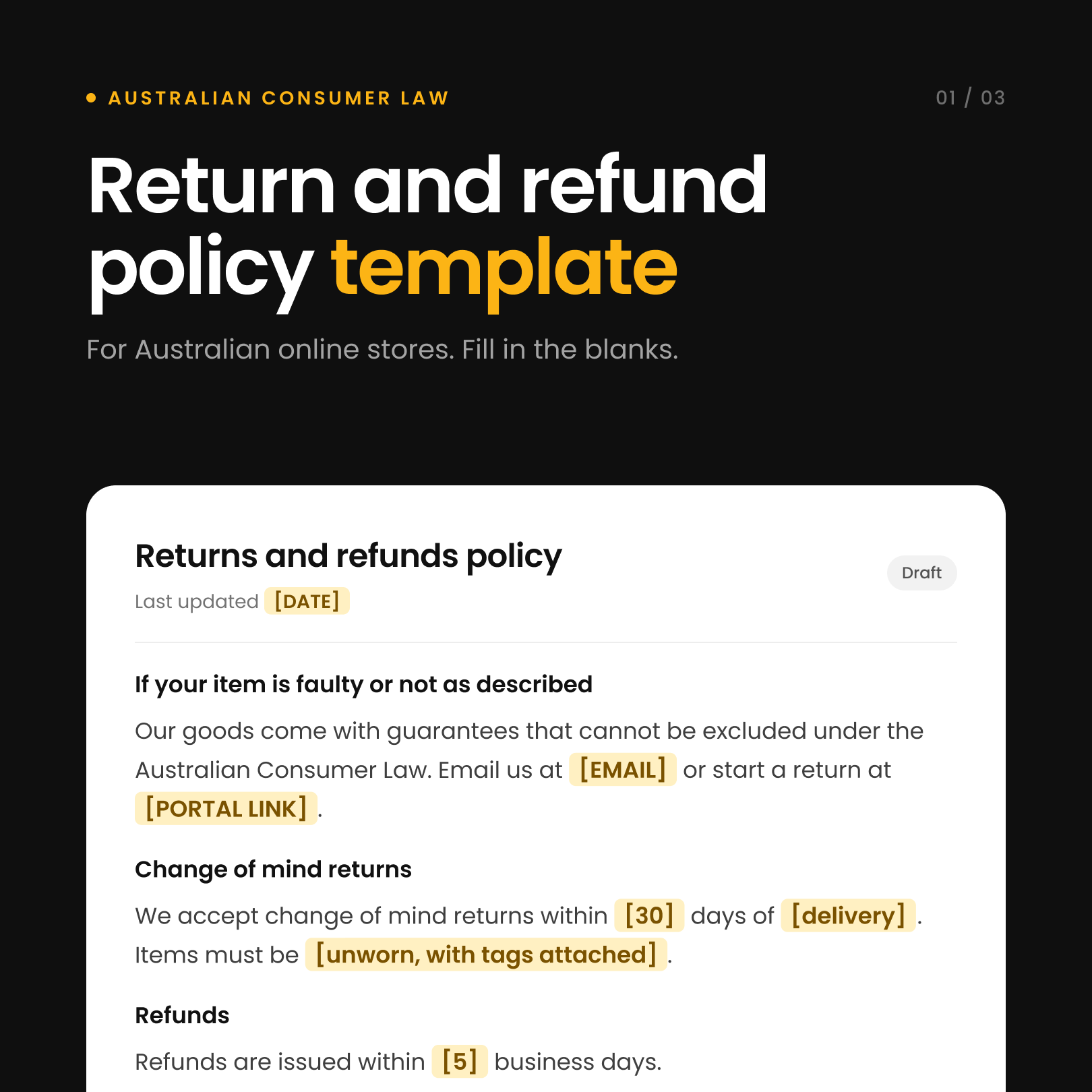
For more on what to write in your policy, our return and refund policy template has wording for faulty items that you can copy.
What's changing
At the moment there's no civil penalty just for failing to provide a remedy when a consumer guarantee is breached. Misleading customers about their rights is a separate breach and already carries penalties. In November 2025, consumer affairs ministers agreed to add civil penalties and stronger enforcement powers for consumer guarantee failures, and Treasury is developing the draft laws. Stakeholders will get another chance to comment before anything passes.
Handling faulty returns in Refundid
In the Refundid returns portal, each return reason can be set up differently. A "Faulty" or "Not as described" reason can ask for photos, come with free return shipping and go to your team for review before a return label is issued, so you can decide whether you need the item back at all. Change of mind reasons keep your normal fees and resolutions.
Refundid doesn't decide whether a fault is major or minor. That's your team's call, and the review step puts the photos and the customer's description in front of them. Your return window and any blocked items apply to the whole order, so a faulty claim outside the window, or on an item you've blocked from returns, needs to come through your support team instead. To see it with your own return reasons, book a demo.
Related reading
- Change of mind refund laws in Australia: what retailers need to know
- Return and refund policy template for Australian online stores
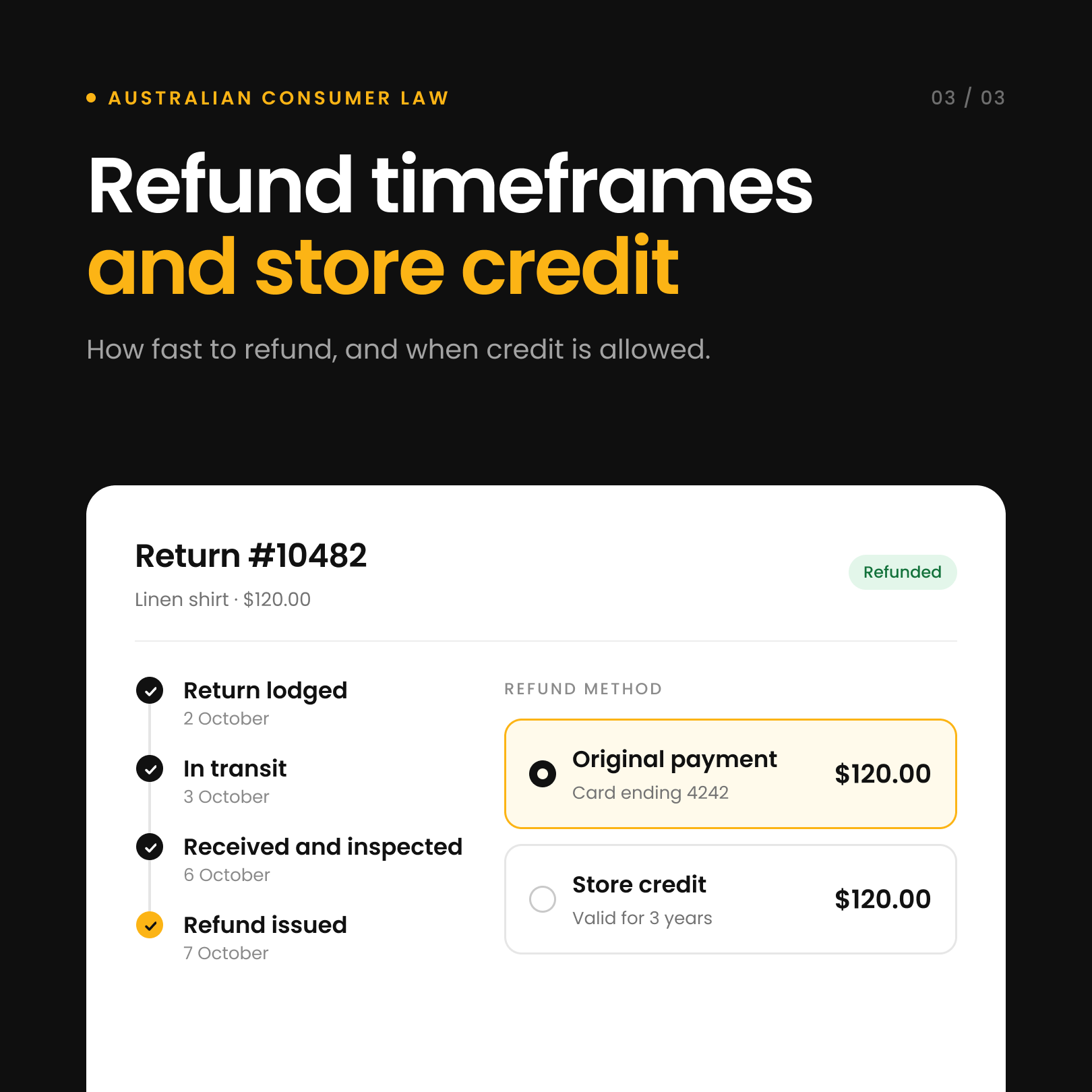
- Refund timeframes and store credit under Australian Consumer Law
This is general information only and should not be considered legal advice. If you're not sure how the law applies to your business, talk to a lawyer.