

.avif)




The short answer
You can charge for returns, and plenty of stores do. A restocking fee or a flat return fee takes some of the cost off your margin, but it also changes how people shop with you. Shoppers read return terms before they buy, and a fee can be the reason someone leaves a cart or never places a second order. Free returns do the opposite. They help sales and cost you money on every return.
There's a middle option more retailers are using. Shoppers who want free returns pay a small amount at checkout to cover them, and everyone else buys on your standard terms. This guide compares five approaches, what each one does to conversion, repeat purchase and margin, and the rules you need to follow in Australia and the US.
What is a restocking fee?
A restocking fee is an amount a retailer keeps from a refund to cover the cost of taking a returned item back into stock. That means inspecting it, repackaging it, putting it back on the shelf and sometimes selling it at a discount because it's no longer new.
It's usually a percentage of the item's price. Charge 15% on a $200 pair of headphones and the customer gets $170 back. Some stores use a fixed amount per item instead.
You'll mostly see restocking fees where a returned item loses value quickly or costs a lot to handle: opened electronics, furniture and other bulky goods, special orders and custom items. They're less common in fashion, where most returns can go straight back on sale.
What is a return fee?
A return fee is a flat charge for making a return, whatever is being sent back. Stores call it a returns processing fee or a return shipping fee, and it usually comes out of the refund rather than being paid upfront.
The difference is what the charge is tied to. A restocking fee scales with the value of the item. A return fee is the same for a $30 t-shirt and a $300 coat, which makes it easier to explain but harder on cheap orders, where the fee can eat a big share of the refund.
Why more stores are charging for returns
For a long time free returns were treated as the cost of selling online. Shipping and warehouse costs have gone up since then, and shoppers have got used to ordering two sizes and sending one back. Most stores also have a small group of customers who return far more than everyone else, so a free returns policy ends up paying for their habits out of everyone's margin.
Charging for returns is the obvious fix, but it isn't free either. You pay for it in sales.
Five ways to handle the cost of returns
1. Free returns paid by the retailer
You pay for the label and the handling, and the customer gets every dollar back. It's the easiest policy to sell. Shoppers who aren't sure about fit or quality are more willing to buy when sending it back costs nothing, and a free return that goes smoothly is often what brings someone back to order again.
The cost lands entirely on you. Every return carries a label, handling and staff time, and that bill grows with your order volume. It also does nothing to discourage customers who order with the plan of sending most of it back.
2. Flat return fees
Customers pay a fixed amount per return, usually taken from their refund. It's simple to explain and recovers some of your shipping cost. It also tends to cut casual returns, because people think twice about sending back something they're only half unhappy with.
The catch is that shoppers see it before they buy. A fee in your returns policy is one more reason for a hesitant customer to leave, and someone who paid to return an order can be slow to place the next one. On cheap items the fee can feel out of proportion to the refund.
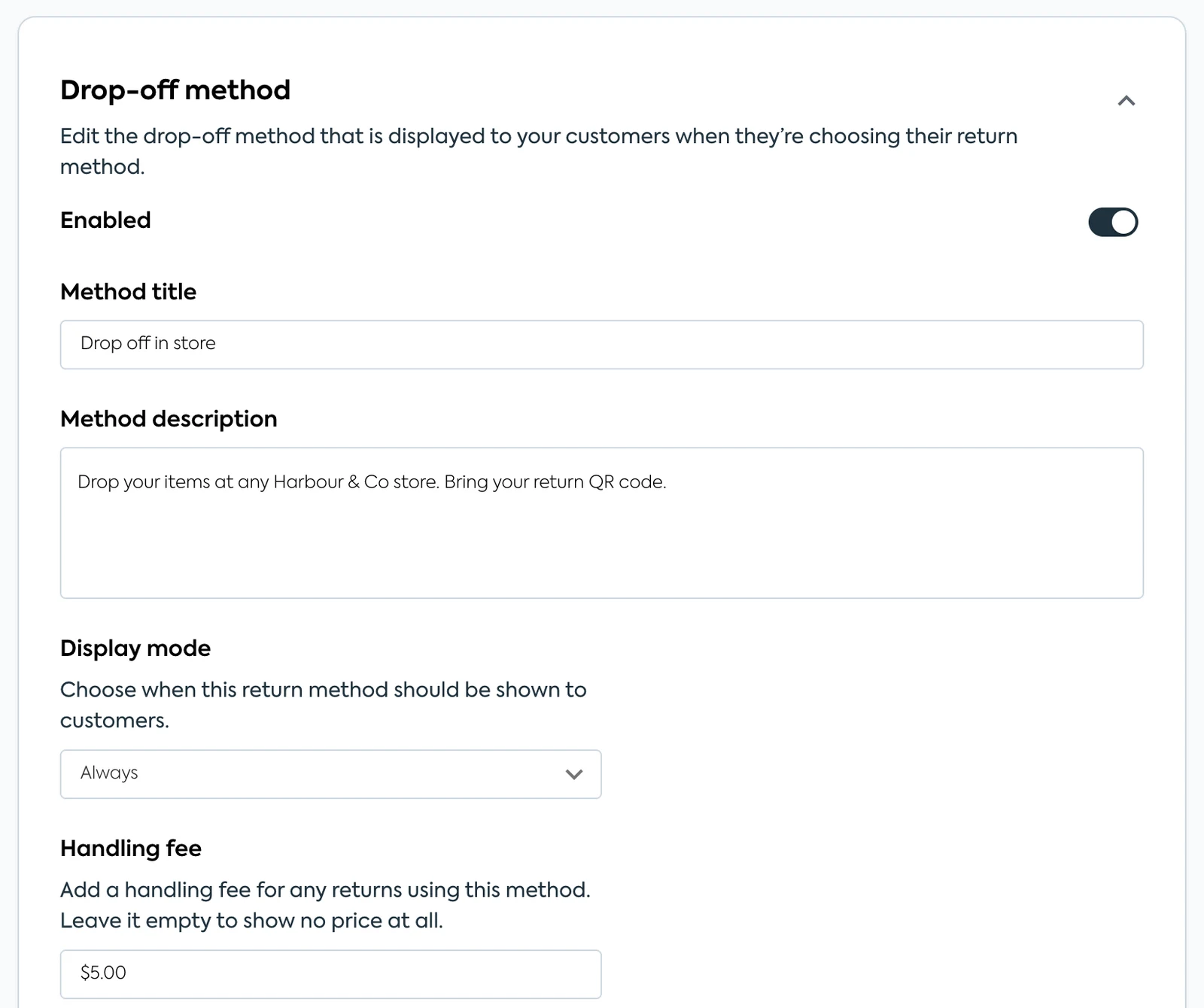
In Refundid, you can add a handling fee to a return method such as drop off in store, and customers see it before they choose that method.
3. Restocking fees
You keep a percentage of the refund to cover the work of getting the item back into sellable condition. This makes the most sense for products that genuinely lose value once opened or are expensive to handle, and customers in those categories tend to expect it. It protects margin on high-value returns, where a flat fee would barely make a dent.
It's harder to justify for everyday products. A shopper sending back an unopened item in its original packaging will fairly ask what the fee is for, and a fee that feels like a penalty is the sort of thing that ends up in reviews.
4. Deducting the label cost from the refund
Starting a return is free, but the cost of the return label comes out of the refund.
Customers generally see this as fair because they know exactly what they're paying for. It covers your actual shipping cost rather than a number you picked, and customers can avoid it by dropping the item off in store or arranging their own shipping if you offer those options.
It's still a charge, and some customers only notice it when a smaller refund than they expected lands. Showing the cost clearly before they confirm the return avoids most of that.
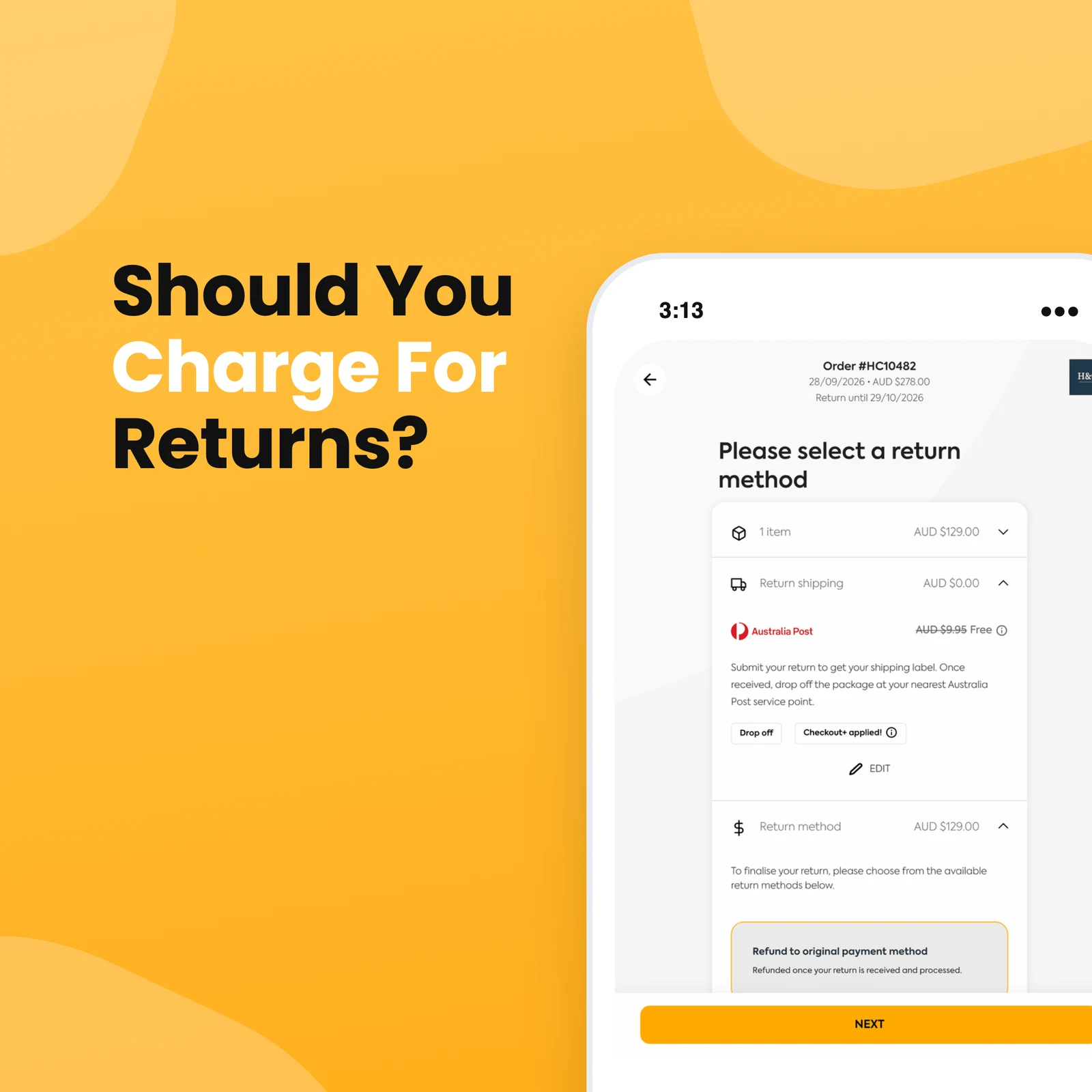
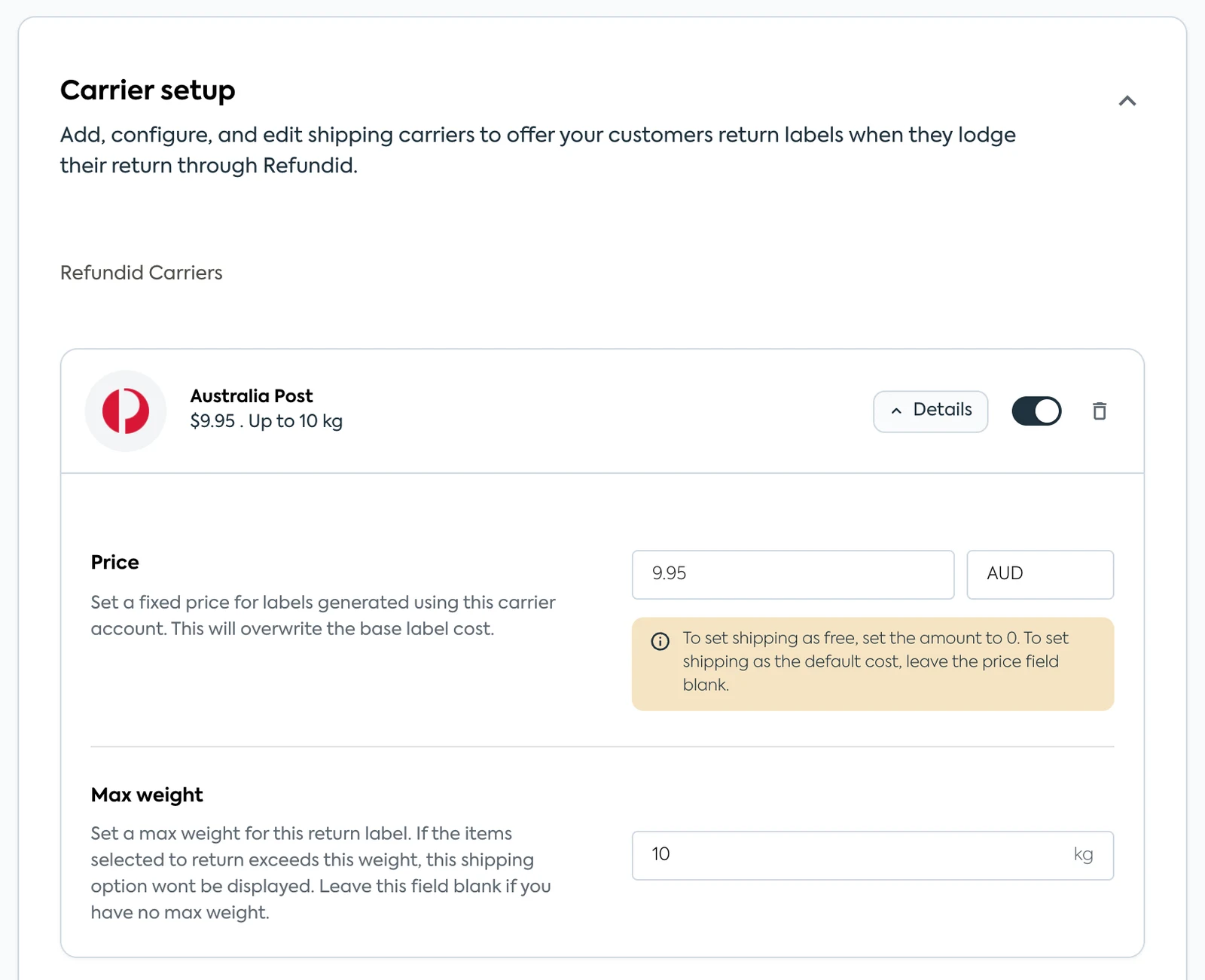
In Refundid, you set the label price for each carrier, and customers see it come off their refund before they submit the return. Set the price to 0 and return shipping is free.
5. Shopper-paid return cover at checkout
At checkout, customers can choose to pay a small amount to make their returns free. If they add it, their return label is covered when they send something back. If they don't, they buy on your standard returns terms.
This changes who pays for free returns. Instead of you covering every return, or every customer paying a fee after the fact, the shoppers who care most about free returns pay for them upfront. Because it's a choice made before purchase it doesn't read as a penalty, and you can still offer free returns to anyone who wants them.
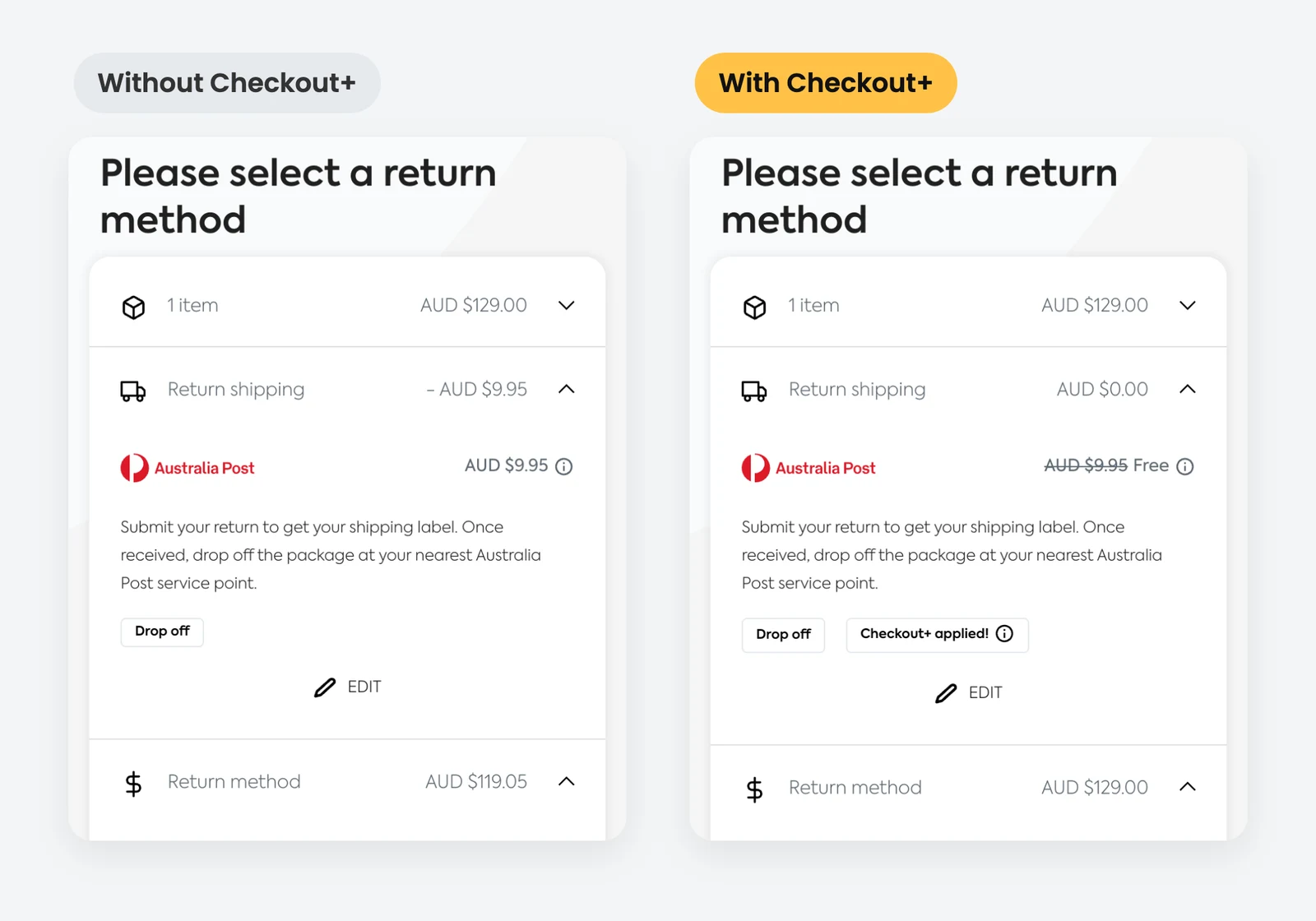
It works best next to a clear standard policy, like a label deduction or a return fee, so shoppers can see what the cover gets them. Customers who skip it still cost you whatever your standard policy doesn't recover, so it sits alongside the rest of your returns setup rather than replacing it.
How each option affects conversion, repeat purchase and margin
Free returns paid by you are the strongest option for conversion and for getting customers back, and the most expensive for margin. Flat return fees and restocking fees sit at the other end. They protect margin, but every hesitant shopper who reads the fee and leaves is a sale you don't see, and that cost never shows up on a returns report. Restocking fees get away with it in categories where shoppers expect them and look punitive almost everywhere else.
Label deductions land in between. They recover what the return actually cost you, and because the customer can see what they're paying for, they hurt conversion less than a fee does. Shopper-paid cover is the only one of the five that can leave you better off after a return, since the shoppers who want free returns have already paid for them and you earn a share of what they paid.
Plenty of stores mix these. A common setup is free exchanges and store credit with a fee on refunds, which keeps the money in the business and still gives customers a free option. Another is to charge only after a set number of returns, so the fee lands on the customers who return the most.
Charging for returns in Australia
Australian retailers can charge for change of mind returns. Australian Consumer Law doesn't require you to accept change of mind returns at all, so if you do, you set the terms. That can include a restocking fee or a return fee, as long as customers can see the terms before they buy and you stick to them.
It's different when the product is the problem. If an item is faulty, unsafe, not as described or not fit for purpose, the customer is entitled to a repair, replacement or refund under the consumer guarantees, and you can't charge a restocking fee or return fee on that return. If sending the item back would cost the customer a significant amount, for example because it's bulky, you have to collect it at your own expense.
So your returns policy needs to keep the two apart. A line like "a 15% restocking fee applies to all returns" can mislead customers about their rights if it reads as though it covers faulty goods too. Our guide to change of mind refund laws in Australia covers how to word that split.
Charging for returns in the US
No federal law stops US retailers from charging restocking or return fees. What matters is disclosure. Some states require stores to post their refund policy where customers can see it, and a fee nobody mentioned before purchase is a quick route to complaints and chargebacks. If you sell into several states, check the rules where your customers are, and put any fee in your returns policy, on the product pages it applies to and in the order confirmation.
How to introduce a return fee without losing customers
- Put the fee in your returns policy and near the add to cart button, not just in the fine print.
- Show the amount in your returns portal before the customer confirms, so a smaller refund is never a surprise.
- Keep a free option available, such as exchanges, store credit or drop off in store.
- Waive the fee for faulty, damaged or incorrect items. In Australia you have to.
- Look at who is returning. If a handful of customers account for most of your returns, a fee aimed at them may do more than a fee on everyone.
Where Checkout+ fits
Checkout+ is Refundid's shopper-paid option for Shopify stores. At checkout, customers see an option to unlock free returns for a small fee. If they add it and later return something, their return label is free and handling fees on other return methods are waived. Customers who don't add it return on your normal terms, whether that's a label deduction or a return fee.
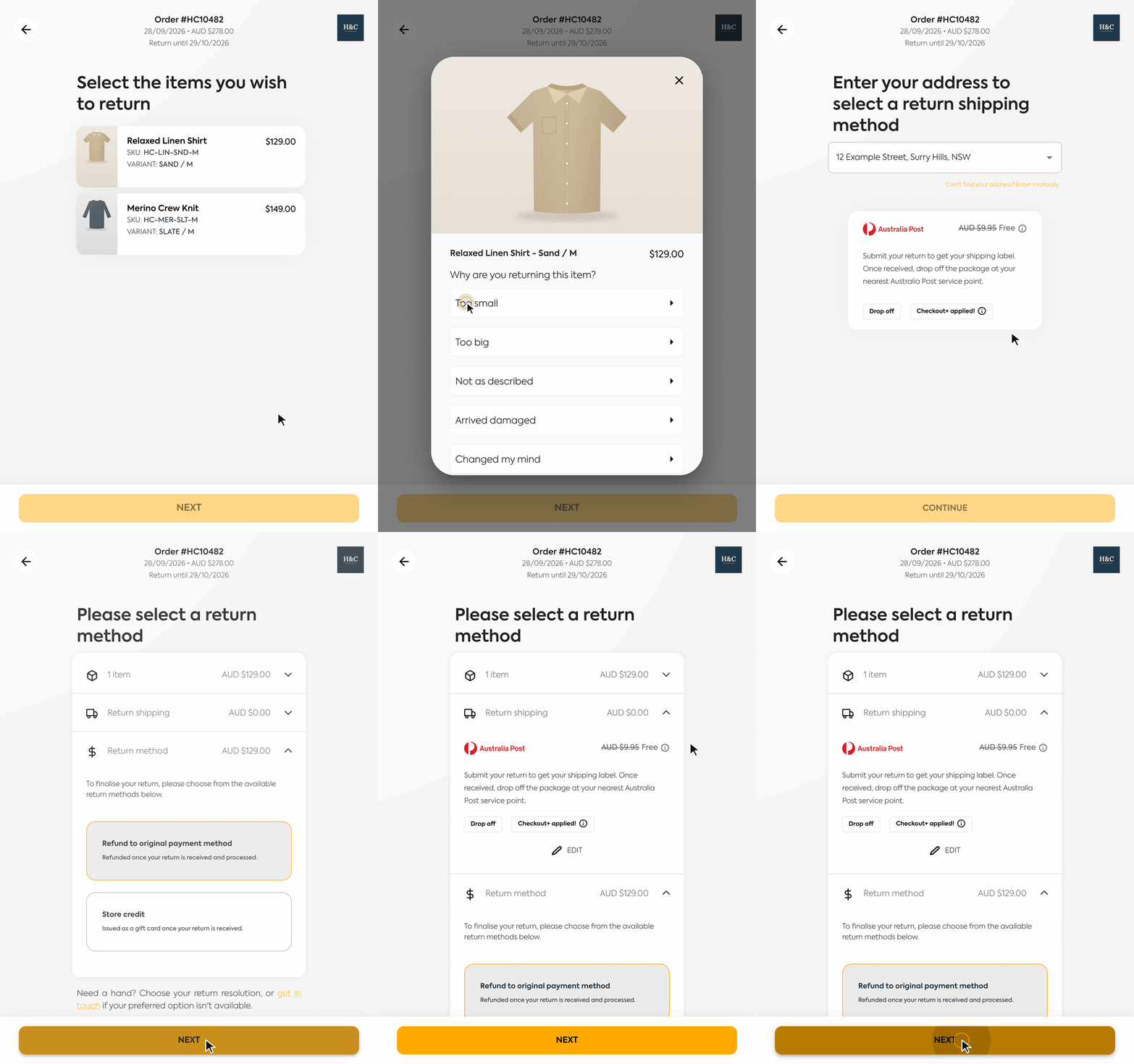
Checkout+ is free for retailers, and you earn a share of the fee shoppers pay. Free returns stop being a pure cost, and customers who don't need the cover aren't asked to pay for it.
If you already offer free returns, it's a way to recover some of that cost without taking anything away from customers. If you charge for returns today, it gives shoppers a way around the fee that they choose for themselves. If you're weighing up checkout add-ons more broadly, we've also written about whether your store should offer protection at checkout.
To see how Checkout+ would look on your store, book a demo.