






Shopify returns apps run everything that happens after a customer decides to send something back. They earn their place once your store has outgrown email and Shopify's built-in tools. This guide compares six of them: what each one does, what it costs at your return volume, and who it suits.
Key takeaways
- Shopify's native returns work at low volume. Exchanges keep revenue that refunds lose.
- Compare cost at your own volume, because included returns and overage fees vary a lot between apps.
- Shoppers can fund free returns at checkout, which can bring the platform cost to $0.
- Instant refunds pay shoppers when they lodge a return, before the item ships back. Of the apps here, only Refundid offers them.
What is a Shopify returns app?
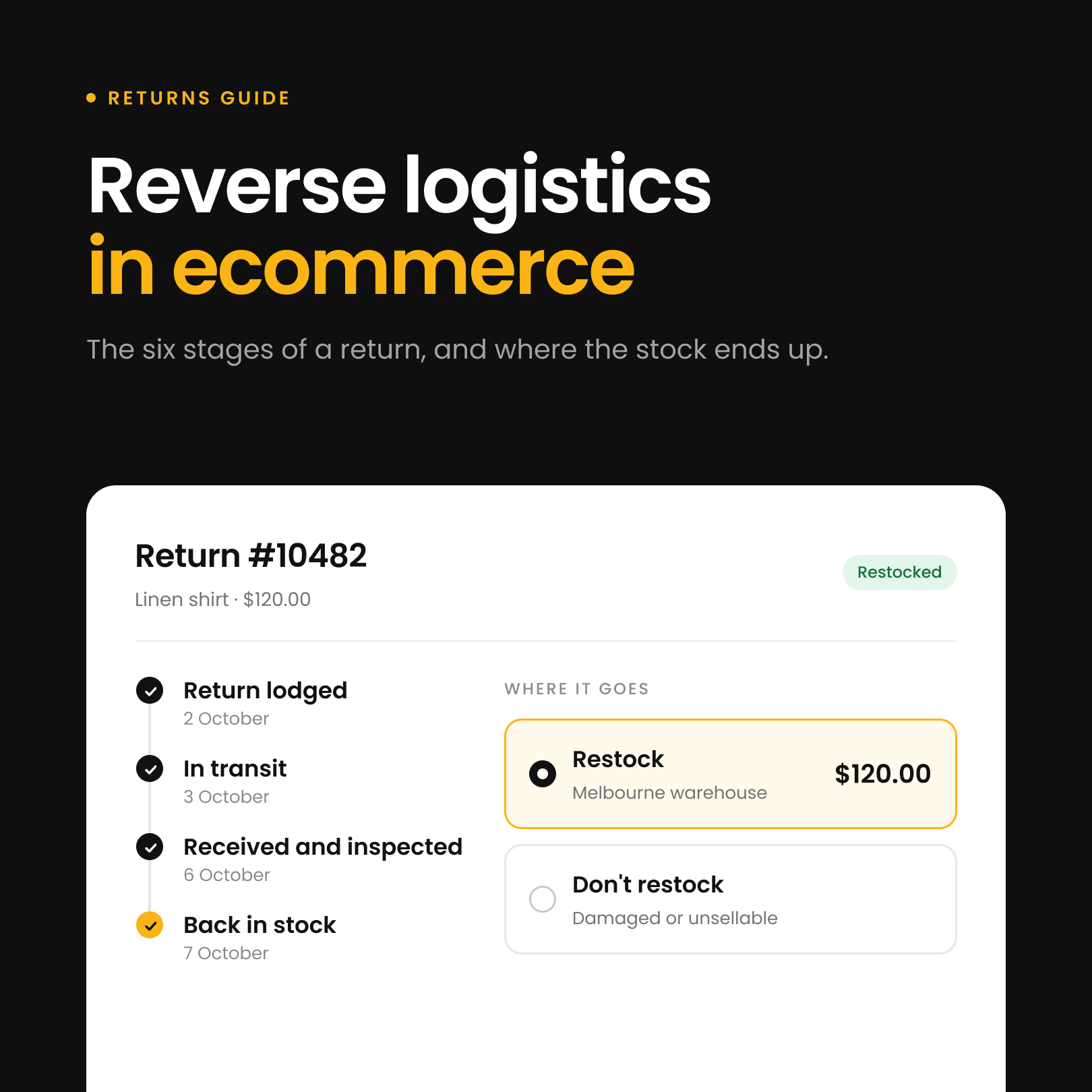
A Shopify returns app manages your store's returns. Most are self-serve for shoppers and bring return rules, labels, refunds, exchanges, store credit and reporting together in one place, connected to Shopify. A return usually goes through four steps:
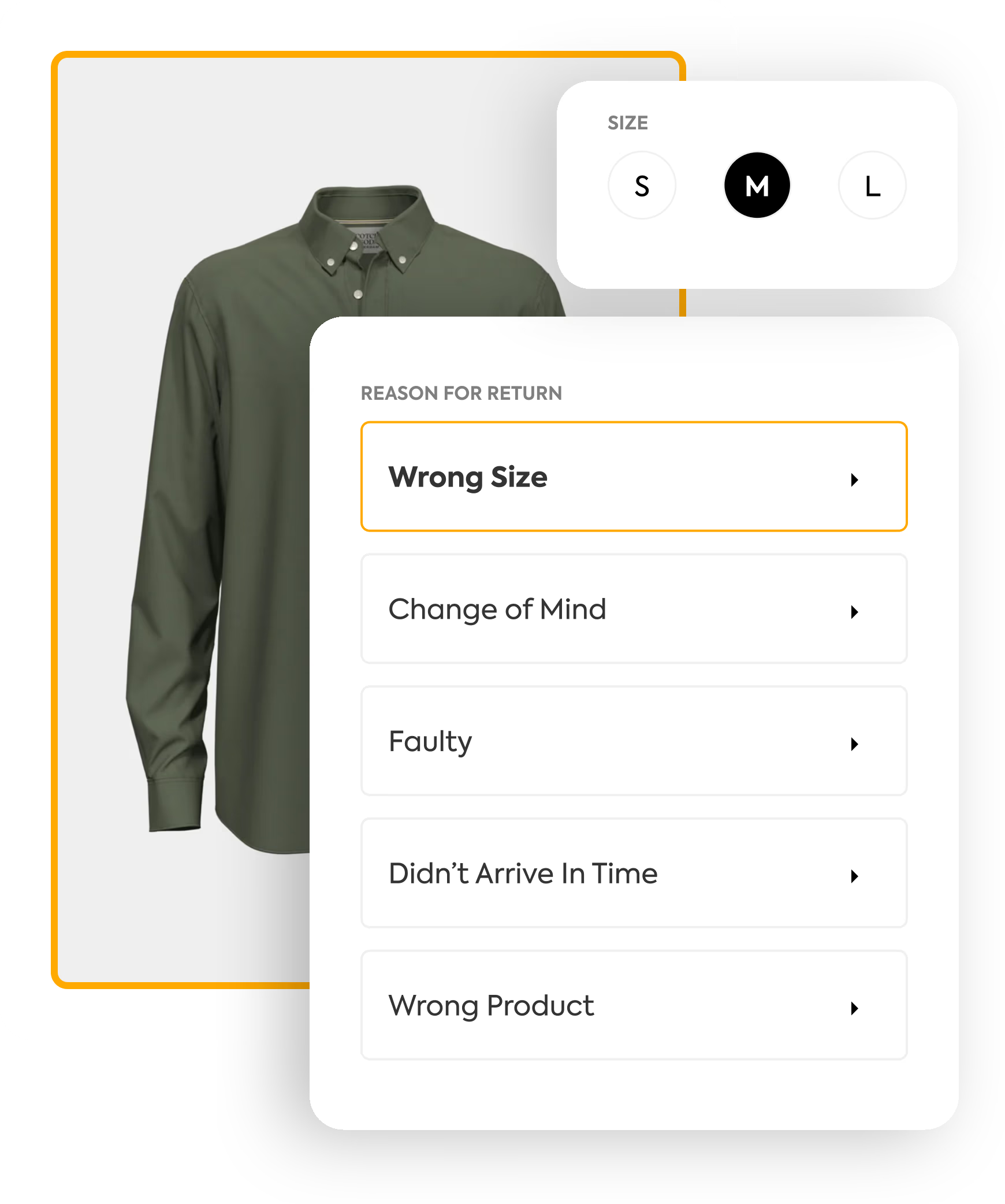
- A customer asks to return an item for a refund, exchange or store credit.
- The request is approved, either automatically by your rules or by your team.
- The customer gets a return label and sends the item back.
- Once the item arrives and passes inspection, the refund, exchange or credit goes through.
If returns are a weekly cost rather than a monthly annoyance, it's time for a returns app. If you're still setting up the basics, start with how to do returns on Shopify.

Shopify's built-in returns vs a returns app
Shopify has its own self-serve returns. They're free and work well at low volume. Here's how they compare with a dedicated app. For the full breakdown, read Shopify native returns vs a returns app.
| Feature | Shopify native returns | Dedicated returns app |
|---|---|---|
| Cost | Included in your plan. Return labels are billed on scan, once the carrier has the parcel. | A monthly subscription on top of your plan. Price depends on the app and your return volume. |
| Return rules | Choose which items qualify and for how long. No exchange-specific rules. | Rules by product, collection or reason, final-sale items, and auto-approve or manual review. |
| Carrier labels | US domestic orders only. Other returns need a carrier account or another app. | Multi-carrier and international labels, created automatically when a return is approved. |
| Exchanges | Shoppers can't request exchanges themselves. Your team handles them. | Shoppers swap for another size or a different product in the portal. |
| Store credit | Available, with no built-in way to encourage it over a refund. | Credit-first flows, with optional bonus credit instead of a cash refund. |
| Instant refunds | Your team refunds after the item is back and approved. | Refundid only, among the apps here. Shoppers get their money when they lodge the return, before the item ships back. |
| Shopper-funded returns | Restocking or return shipping fees, set one return at a time. | An opt-in fee at checkout that funds free returns, or return fees set by carrier, region or reason. |
Why your returns experience matters
Returns are a big part of selling online, and shoppers notice how you handle them. According to the NRF's 2025 Retail Returns Landscape:
- 19.3% of online sales are expected to be returned.
- 82% of consumers say free returns are an important consideration when they shop online.
- Retailers estimate that 9% of returns are fraudulent.
A strict or complicated policy puts repeat purchases at risk. Return fraud does happen, but it's a small share of returns, and analytics, return rules and fraud checks catch much of it early.
Benefits of a Shopify returns app
Keep revenue with exchanges and store credit
If a refund is the only option you offer, every return loses the sale. Exchanges and store credit keep that revenue in your store. Exchanges are the biggest revenue lever in returns, so make them as easy as possible for shoppers.
Fewer "where's my refund?" tickets
Shoppers start returns in a self-serve portal and can see the status straight away. Automatic emails keep them updated as the return or exchange moves along, which cuts support tickets and frees up your team.
Less manual work for your team
A returns app automates approvals for eligible returns, label creation and restocking. With the right return and exchange rules in place, your team spends less time on admin and more time on the business.
Better data on why products come back
Returns data shows you return reasons by product and your most-returned items. That's where you find fixable problems such as sizing, product photos and quality.
A returns experience that brings shoppers back
A quick, clear return makes shoppers more likely to buy from you again. Make the process easy and a reluctant customer can become a repeat one.
Key features to look for in a Shopify returns app
Comparing apps for your store? Here are eight features a returns platform should have.
Branded self-serve returns portal
Your portal should carry your branding, not your returns provider's. Apps such as Refundid let you use your own, so shoppers get a consistent experience and never feel they've left your site. They can start a return or exchange without contacting your support team.
Return rules and automation
You should be able to adjust return windows, final-sale items, per-country rules, auto-approval, fraud checks and blocklists to match your policy. These should run automatically, so shoppers get fast answers and your team does less admin.
Exchanges to any product, not just another size
Plenty of shoppers will take an exchange instead of a refund, whether that's a different size or a different product altogether. Bonus credit on exchanges makes the swap more attractive and lets a shopper trade up to a higher-priced item. That keeps revenue you'd otherwise refund.
Instant refunds and instant exchanges
With instant refunds and exchanges, a shopper gets their money or their replacement before the original item is back with you. The returns provider carries the risk, not your business. Refundid's SHEIKE case study shows what this looks like in practice.
Shopper-funded returns
Shoppers can opt in to a small fee at checkout that funds free returns. Some providers share that fee with the retailer, so returns become a revenue line instead of a cost you carry.
Labels and carrier coverage
Look for prepaid labels, QR codes and boxless returns. The less a shopper has to think about, the better. Local carriers matter too, such as Australia Post in Australia, NZ Post in New Zealand and USPS in the United States.
Returns analytics
You should be able to see return rates by product, reason and customer. That shows you which items have problems, and which customers may be taking advantage of your policy.
Integrations with your stack
Your returns app should connect to the rest of your stack: helpdesk, email marketing, ERP and warehouse systems, 3PLs, and POS for in-store returns.
The best Shopify returns apps in 2026, compared
Start with the two tables below, then read each app's details.
At a glance
Prices and ratings checked on 29 October 2026, from each app's Shopify App Store listing.
| App | Rating | Entry price | Included returns | Extra returns | Free plan | Best for | Not ideal for |
|---|---|---|---|---|---|---|---|
| Refundid | 5.0 | $0 with Checkout Plus, or $399/mo for Core | Up to 85 on Core | No overage fee. Custom plan above 85 | Yes, with Checkout Plus | Shopify brands wanting instant refunds and exchanges, and AU/NZ retailers | Small stores that want a cheap self-serve plan without offering Checkout Plus |
| ReturnGO | 4.9 | $147/mo | 110 | $1.25 each | No (free trial) | Fine-tuned control over return policies | Small stores wanting a free plan |
| AfterShip Returns | 4.7 | $19/mo | 20 | $0.50 each on Essentials | Return Care tier | Price-conscious stores and AfterShip tracking users | Stores well over 20 returns a month on Essentials |
| Return Prime | 4.8 | Free | 5 | $0.49 each | Yes | Small to mid-size stores wanting a low starting cost | Brands needing warehouse, API or SLA tools below the Scale plan |
| ReturnZap | 4.8 | $39/mo | 50 | Fee applies, rate not listed | No (free trial) | Smaller stores and EU sellers wanting strong rules | Brands needing helpdesk, 3PL or warehouse integrations on the entry plan |
| Narvar | Not listed | Custom quote | Custom | Custom | No | Large omnichannel retailers with complex policies | Small and mid-size stores wanting self-serve sign-up and published prices |
What each app costs at your return volume
Monthly cost on the cheapest published plan at each volume, using each app's included returns and per-return fees.
| App | 50 returns/mo | 150 returns/mo | 500 returns/mo |
|---|---|---|---|
| Refundid with Checkout Plus | $0 | $0 | $0 |
| Refundid Core | $399 | Custom quote | Custom quote |
| Return Prime | $19.99 | $64.09 | $174.49 |
| AfterShip Returns | $34 | $84 | $259 |
| ReturnGO | $147 | $197 | $477 |
ReturnZap and Narvar don't publish per-return fees, so they're not included.
1. Refundid
Refundid is an Australian-built returns platform for Shopify brands, known for instant refunds and Checkout Plus. It covers instant refunds and exchanges, store credit, labels, rules, analytics and in-store returns. Brands including VRG GRL and Muscle Republic use it to run their returns. See Refundid for Shopify for how it works with your store. Selling into Europe? See how Refundid handles UK and EU returns.

Top features
- Checkout Plus, an optional fee shoppers pay at checkout that funds free returns. You pay nothing and earn a share of each opt-in.
- Instant exchanges and refunds
- Exchanges for another size or any other product
- Store credit, including bonus credit when shoppers choose an exchange over a refund
- Labels across more than 100 carriers, alongside QR returns and pickups
- Custom return rules
- Real-time returns analytics
- In-store returns
- Integrations with Australia Post, NZ Post, USPS, DHL, EasyPost, Gorgias, Shopify Flow and ERPs
Checkout Plus: free returns funded at checkout
Checkout Plus lets shoppers fund free returns at checkout. A shopper opts in for a small fee, and that fee pays for their free return under the rules you set. It costs you $0 a month whatever your return volume, and you earn a share of each opt-in. Shoppers who skip it still get the same returns experience.
Checkout Plus isn't shipping protection at checkout. Shipping protection covers parcels lost or damaged on the way to the shopper. Checkout Plus pays for the trip back.
How to offer free returns on Shopify without paying for them
- Install Refundid from the Shopify App Store and switch on Checkout Plus.
- Set which returns are free using your return rules, for example by reason, product or region.
- Shoppers who opt in at checkout get a free return label and no handling fee. You pay nothing for the platform and earn a share of each opt-in.
Pricing
Refundid's pricing starts at $399 a month for Core, which includes up to 85 returns. With Checkout Plus, the platform costs $0 a month at any volume. Above 85 returns a month, we price a custom plan on your actual volume and refund mix instead of a rate card. There's no lock-in contract, no setup fee and no per-return overage fee.
Best for
Shopify brands from scaling DTC to omnichannel enterprise, especially fashion, beauty, and Australian and New Zealand retailers.
Not ideal for
Small stores that want a cheap self-serve plan without offering Checkout Plus.
How does it compare?
Refundid is the only app on this list that combines instant refunds and exchanges with shopper-funded returns through Checkout Plus. Pricing is flat, with no per-return fees up to 85 returns, and it holds a 5.0 rating on the Shopify App Store.
"Refundid has changed the way we offer customer service, bringing it into our ecosystem not only simplified a number of admin related tasks, streamlined our warehousing & QA process and get our goods back into stock, but it has set up meaningful insights. Refundid is a great partner who is aligned to our values and sentiments towards our loyal customers."
- Sid Sharma, Head of IT and Business Improvement, Seafolly
Refundid in six facts
- Founded in Sydney in 2020 and launched in February 2021.
- Instant refunds and exchanges are processed before shoppers send the item back.
- Checkout Plus is a small, optional fee paid at checkout that funds free returns, and retailers earn a share of it.
- Core costs $399 a month for up to 85 returns.
- Integrates with Shopify, BigCommerce, WooCommerce, Magento and commercetools, plus custom APIs.
- Retailers include Seafolly, Showpo, Culture Kings and SHEIKE.
2. ReturnGO
ReturnGO is a highly configurable returns app for Shopify brands. It holds a 4.9 rating on the Shopify App Store, and reviewers highlight its detailed policy rules, Shop Now exchanges and order tracking.
Top features
- Auto-exchange, auto-refund and auto-approve rules
- Photo and video uploads
- Ship by ReturnGO labels
Pricing
Premium costs $147 a month and includes 110 returns, then $1.25 for each extra return. Pro is $297 a month with 300 returns, then $0.90 each. There's a 14-day trial but no free plan.
Best for
Brands that want fine-tuned control over their return policies.
Not ideal for
Small stores wanting a free plan. High-volume brands should work out overage costs before committing.
How does it compare?
ReturnGO rewards teams willing to spend time on setup. See Refundid vs ReturnGO for how the two stack up.
3. AfterShip Returns & Exchanges
AfterShip Returns suits stores already using AfterShip tracking. It has a 4.7 rating on the Shopify App Store, and its portal supports five languages.
Top features
- Return Care tier, with shopper-funded returns and a revenue share
- AI exchanges and fraud checks on Premium
- Warranty portal
- Shopify POS support
Pricing
Essentials costs $19 a month and includes 20 returns, then $0.50 for each extra return. Premium is $119 a month with 100 returns, then $1 each.
Best for
Price-conscious small businesses and anyone already using AfterShip tracking.
Not ideal for
Stores handling well over 20 returns a month on Essentials, where overage charges add up.
How does it compare?
AfterShip's low entry price is its main draw, and the right plan depends on your monthly return volume. Run your own numbers against each tier before you decide.
4. Return Prime
Return Prime is a rules-driven returns app for growing DTC brands on Shopify. It has a 4.8 rating, 24/7 live support on paid plans and more than 100 integrations.
Top features
- Branded portal
- Auto-approve rules
- Pro-rated refunds on Buy X Get Y orders
- EU withdrawal button
- Warehouse integration on the Scale plan
Pricing
It's free to install with five return requests, then $0.49 per request. Grow is $19.99 a month with 60 requests, Thrive AI is $79.99 with 180, and Scale is $149.99 with 450 or more. Extra requests cost $0.49 on Grow and Scale and $0.79 on Thrive AI.
Best for
Small to mid-size stores wanting a low starting cost.
Not ideal for
Brands needing warehouse, API or SLA tools below the Scale plan.
How does it compare?
Return Prime keeps the entry cost low, but some of the heavier tools sit on the top tier. Refundid vs Return Prime shows how the two differ.
5. ReturnZap
ReturnZap is a flexible, Built for Shopify returns app that suits merchants selling into the EU. It has a 4.8 rating, has been on the App Store since 2016, and its portal supports four languages.
Top features
- Exchange for any product at any price
- Store and bonus credit
- "Green returns" with no shipping
- EU withdrawal compliance
Pricing
Pro starts at $39 a month and Advanced at $69 a month, each with 50 returns. A fee applies to extra returns.
Best for
Smaller stores and EU sellers wanting strong rules.
Not ideal for
Brands needing helpdesk, 3PL or warehouse integrations on the entry plan.
How does it compare?
ReturnZap has the longest track record on this list. Check its integration list against your own stack before you commit.
6. Narvar
Narvar is an enterprise post-purchase platform for large retailers with complex returns. Its Shopify returns page positions it as a full returns and exchange solution rather than a lightweight app.
Top features
- Printerless and boxless returns
- 200,000+ drop-off locations
- Smart routing of returned stock
- Recommended exchanges
- ROI analytics
Pricing
Not published. Narvar works on custom quotes.
Best for
Large omnichannel retailers needing drop-off networks and complex policies.
Not ideal for
Small and mid-size stores wanting self-serve sign-up and published prices.
How does it compare?
Narvar sits at the enterprise end of this list, so it's a different kind of purchase from the other apps. Refundid vs Narvar explains where each one fits.
Switching returns apps: what to check first
Moving platforms is easier when you sort out the awkward parts before you start.
- Check your current contract's end date and notice period, and confirm you can export your past returns data.
- Decide who will rebuild your rules, portal branding and integrations in the new app.
- Switch outside peak returns season, ideally after the January post-holiday spike.
- Run both portals side by side so returns already in progress finish where they started.
Agree on this list before you cancel anything, and keep the old portal live until its last open return is closed.
Final thoughts
When you choose a Shopify returns app, compare three things: cost at your return volume, how well it handles exchanges, and who pays for returns. Refundid gives you instant refunds and exchanges, plus Checkout Plus, which lets shoppers fund free returns and costs you $0 a month. Book a demo to see how it would work for your store.
Frequently asked questions
What is the best returns app for Shopify?
It depends on your return volume and your goals. If you want to keep more revenue through exchanges and pay nothing for the platform, Refundid is a strong choice. It combines instant refunds and exchanges with Checkout Plus, an optional fee shoppers pay at checkout that funds free returns. You earn a share of each opt-in.
Does Shopify have a built-in returns feature?
Yes. Shopify has self-serve returns built in, but it does far less than a dedicated returns app. Shoppers can't request exchanges themselves, and labels are limited to US domestic orders.
How much does a Shopify returns app cost?
Published plans for the apps in this guide run from free to $399 a month. Most charge $0.49 to $1.25 per return once you pass the included returns, and enterprise platforms like Narvar quote on request. Refundid Core is $399 a month for up to 85 returns with no per-return fees, and with Checkout Plus the platform costs $0.
How do I offer free returns without paying for them?
Let shoppers fund them. With an opt-in fee at checkout, like Refundid's Checkout Plus, shoppers who opt in get free returns and the fee covers the cost. You pay nothing for the platform and earn a share of each opt-in.
Can a returns app turn refunds into exchanges?
Yes. Exchange-first flows show shoppers an exchange or store credit before a refund, often with bonus credit on top. That bonus lets a shopper swap for a different or more expensive item instead of taking their money back.
Do Shopify returns apps work for Australian stores?
Yes. Refundid is built in Australia, with Australia Post and NZ Post labels and return rules you can set to match Australian Consumer Law. For the legal side, read our guide to change-of-mind refund laws in Australia.